
Children don’t automatically learn that cleaning and tidying up are part of everyday life. If there are still toys everywhere at the end of the day, many parents end up in the next discussion: “Please tidy your room.”
It’s better to turn tidying up into a habit step by step. Your child doesn’t have to clean perfectly. They should learn to take responsibility for their own things and restore order after playing.
This works better if you set clear routines and start together. A short tidy-up before bedtime, fixed places for toys and small tasks can already change a lot. What matters isn’t that your child joins in enthusiastically straight away. It’s about tidying up becoming a matter of course over time.
In this article:
- we look at why tidying up together is so important,
- how you can motivate your child to do it,
- and which tips work best.
How to motivate your children to tidy up the home
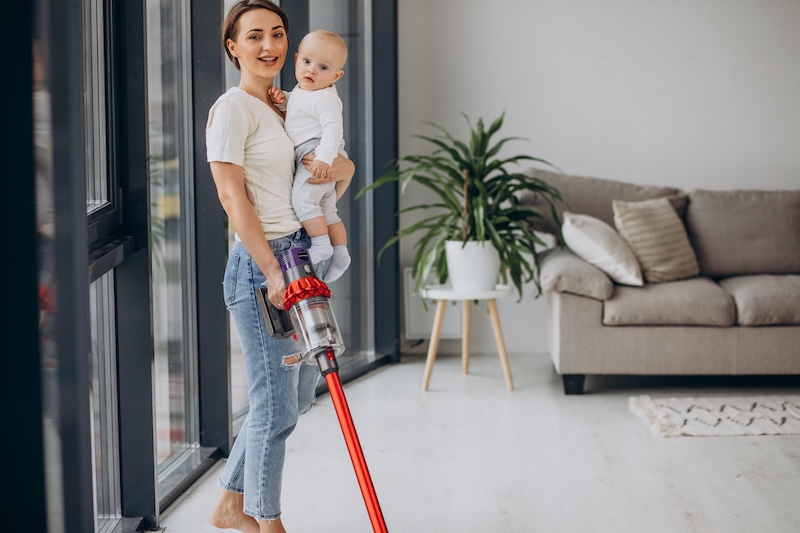
Children can take on small tasks from an early age. What matters is that the task suits the child’s age and independence. A two-year-old still needs much more guidance than a school-age child.
| Age | Suitable tasks |
|---|---|
| 2 to 3 years | Putting away toys, returning books, putting clothes in the laundry basket |
| 4 to 5 years | Tidying the play area, helping to clear the table, sorting things |
| 6 to 8 years | Tidying their own room, sorting laundry, setting and clearing the table |
| 9 years and up | Taking on bigger tasks, organising their own areas independently |
The ages are only a guide. Every child develops differently and needs different amounts of support with new tasks. It’s better to start with a simple task your child can manage reliably and gradually increase their responsibility.
The next section is about how to turn this into fixed habits. The following tips show you how children can help with tidying up without it turning into a new discussion every day.
1. Give every item a fixed place
Children can only tidy up independently if they know where things belong. The simpler the system, the better it works in everyday life.
Practical options include:
- baskets for toys and cuddly toys
- dedicated shelves for books
- boxes for Lego and craft supplies
- hooks for jackets and bags
- labelled or picture-labelled boxes for younger children
It’s important that your child can reach the storage themselves. A basket on the floor makes more sense for a toddler than a high shelf. This turns “Tidy your room” into a specific task: “All the cars go in this box.”
2. Start with a short daily routine
You don’t have to wait until the children’s room has turned into complete chaos. A short routine of five to ten minutes in the evening is often enough.
For example:
- putting toys away
- putting books back on the shelf
- putting clothes in the laundry basket
- bringing things back from the living area
- briefly checking together whether the floor is clear
Try to schedule this round at the same time each day. Little by little, it becomes a fixed part of the day instead of being discussed anew every evening.
3. Let children tidy up after playing
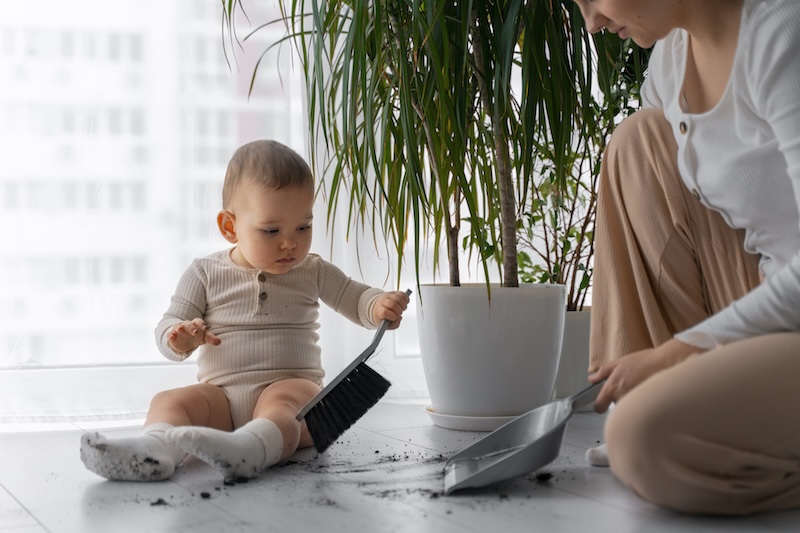
A simple rule can help: before the next game starts, the previous one is finished. With young children, you join in at first and reduce your help step by step.
Depending on the activity, this can look very different:
- putting building blocks in the box
- putting cuddly toys to bed
- putting craft supplies away
- returning books
This creates an early connection between playing and tidying up afterwards.
4. Give your child a choice
Children often cooperate better when they get a say in small decisions. The task stays the same, but your child can decide how to approach it.
For example, ask:
“Do you want to tidy up the books or the building blocks first?”
Or:
“Do you want to start on your own or shall I join in?”
Keep the choice small; two options are quite enough.
5. Make the task more playful
Younger children in particular are easier to motivate when a boring task becomes a little game.
For example, try:
- playing a tidy-up song
- throwing toys into the right box like in basketball
- transporting things with a toy car
- racing against the clock together
- putting on music for five minutes
The game should only make getting started easier. Over time, the task should also work without the entertainment.
6. Praise the effort, not just the result
When your child does something independently, the result doesn’t have to be perfect. Pay attention to the fact that they took responsibility and made an effort.
Instead of a general “Well done”, you can say specifically:
“You put all your books away yourself.”
“You started even though you wanted to keep playing.”
“You remembered to put the pencils back.”
This way, your child notices which behaviour you value. It doesn’t have to lead to a reward every time.
7. Give small and clear tasks
“Help around the house” is too vague for a child. The more specific the task, the easier it is for them to get started on their own.
Instead of:
“Tidy your room.”
better:
“Please put all the books on the shelf.”
As children get older, the tasks can become bigger. An older child can, for example, help with cleaning the windows or take on individual tasks under supervision, such as cleaning the mirror in the bathroom.
Personal belongings are also a good way to teach responsibility. A child who regularly plays on a games console can, for example, learn to clean their own PS5 and put it away properly.
8. Make housework a team effort
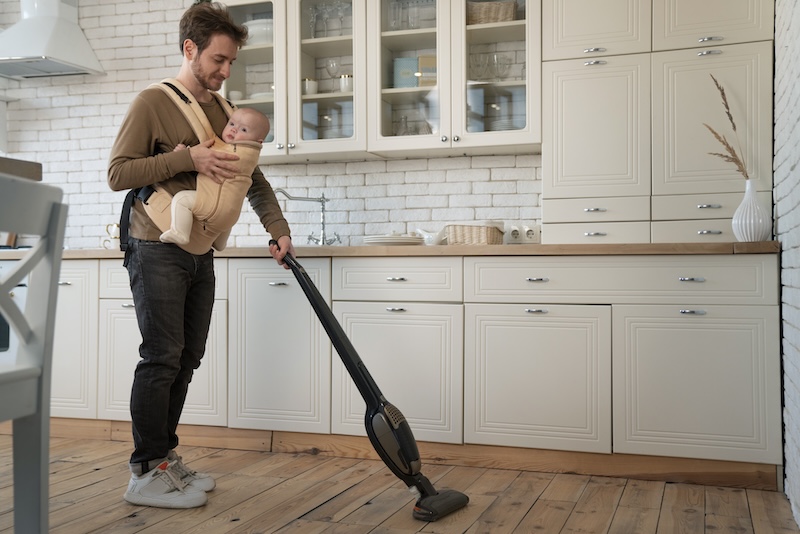
Children don’t have to do every task alone. Especially at the beginning, it can be motivating when parents and children take something on at the same time.
For example, you take care of the kitchen while your child deals with their play area. Or everyone takes on a small part of a shared task.
This sends the message: housework isn’t a job for just one person. Everyone contributes something to the shared home.
9. Stay calm and consistent when faced with resistance
“But I don’t want to” will probably come at some point. That’s part of it. Children aren’t equally motivated every day, and sometimes they’re tired, hungry or busy with something else.
It helps to:
- phrase the task briefly and clearly,
- avoid constantly giving new instructions,
- offer support if something is still too difficult,
- agree on fixed areas of responsibility with older children,
- and not turn every task into a debate about principles.
If the moment is bad, a short break can make sense. What’s important is to come back to the task later instead of taking it off their hands for good.
10. Accept “good enough”
A child’s room doesn’t have to look like a furniture showroom. Once the toys are put away and the floor is clear again, it can still look a little untidy.
“Good enough” can mean:
- toys are generally put away
- dirty clothes are in the laundry basket
- books are back in their place
- clear surfaces are usable again
If you then perfect everything yourself afterwards, you take back part of your child’s responsibility. Small mistakes can stay. Your child isn’t supposed to clean perfectly, but to learn to look after their own things and the shared living space.
Our tip: however, you don’t have to be responsible for the deep cleaning of your home. A professional cleaner can provide additional support, keep things clean and give you practical cleaning tips for the household if needed.
Conclusion
Children don’t have to love tidying up overnight. What’s much more important is that they learn step by step to take responsibility for their own things. Clear rules, fixed routines and age-appropriate tasks make getting started easier.
The result can be imperfect. If toys are put away, clothes are in the laundry basket and the floor is clear again, a lot has already been achieved. You don’t have to perfect every task yourself afterwards.
The same goes for parents: you don’t have to manage all the housework alone. Children can learn to tidy their play area after playing and take on small tasks. For the deep cleaning, you can get support from a professional cleaner from Helpling. That leaves more time for the family and for the tasks that really matter in everyday life.