



Booking a cleaner seems simple at first. You open a website, look at the price, choose a time slot. Done. At least that’s the expectation. In reality, this is often where the problems begin.
You may be familiar with this situation: the cleaning is booked, the appointment is set, yet the result isn’t quite right. Certain tasks were done differently than expected. Some areas were left untouched. You start wondering what went wrong. Was it the price? The person? Or simply a misunderstanding?
In most cases, frustration isn’t caused by major mistakes. It’s small oversights: unclear expectations, unspoken assumptions, or decisions made too quickly. These issues usually only become noticeable once the collaboration is already underway.
That’s exactly what this article is about:
- We highlight the typical mistakes many households make when booking a cleaner.
- We explain why they happen so often.
- And we show you concrete ways to avoid them.
The good news: these mistakes are widespread. The even better news: they’re easy to avoid. With a bit of preparation, the collaboration becomes noticeably more relaxed, both for you and for the cleaner.
The 5 Most Common Mistakes When Choosing a Cleaner

Many everyday problems with cleaning help share the same root cause. They don’t start with the cleaning itself, but with the booking process. Platforms like Helpling clearly show how different cleaning services can be. That’s exactly why it pays to take a closer look before deciding.
Below, we’ve listed the five most common mistakes and how to avoid them.
Mistake 1: Unclear Expectations About the Cleaning
Why this mistake happens so often
“Cleaning” sounds straightforward, but it isn’t. For some, it means mopping floors and cleaning the bathroom. For others, it also includes windowsills, trash bins, or changing bed linens. These differences are rarely discussed.
Often, people assume the cleaner already knows what’s meant. At the same time, the time frame remains unclear. How much can realistically be done in two or three hours? Without this clarification, every cleaning session starts with uncertainty.
What goes wrong
The cleaner sets their own priorities, based on experience or visible dirt. That can make sense, but it doesn’t always match your expectations.
In the end, important areas are left undone. You’re disappointed. The cleaner doesn’t understand what went wrong. Frustration builds on both sides, even though no one intended to do anything wrong.
How to avoid this mistake
Clear expectations aren’t criticism, they’re helpful. The more precisely you explain what matters to you, the better the result.
Discuss tasks in advance. Define priorities. Say openly what you notice most.
A short checklist helps:
- Which rooms are most important?
- What needs to be done on every visit?
- What can occasionally wait?
This clarity saves time and prevents misunderstandings from the start.
Mistake 2: Making the Decision Based Only on Price
Hourly rates are easy to compare. A low price feels safe, especially when the budget is tight. As a result, price quickly becomes the main focus.
Quality is often underestimated or assumed to be a given. This leads to decisions that may seem fine in the short term but cause problems in the long run.
The hidden costs
A low hourly rate doesn’t automatically mean lower overall costs. Often, the cleaning takes longer, appointments are rescheduled at short notice, or cleaners change frequently.
All of this costs time and nerves, and sometimes money, for example, through extra sessions or follow-up work.
A better way to look at costs
Don’t compare just the hourly rate. Look at the overall effort. How reliable are appointments? How consistent is the quality? What services are included?
A simple rule of thumb: cheap is not the same as good value.
Mistake 3: Ignoring Legal and Insurance Issues

Why is this topic often avoided?
Legal matters seem complicated and uncomfortable. Many households assume it’s not their responsibility. That’s not true. Responsibility always lies with the household, regardless of how the cleaner was found.
Possible consequences
If damage occurs, liability questions arise quickly. Without insurance, the household may have to cover the costs. If the employment isn’t properly registered, legal issues can follow, ranging from back payments to fines. In serious cases, this creates major uncertainty.
How to stay on the safe side
Clarify the employment model and make sure your cleaning help is insured. Ask about insurance coverage. Use transparent providers.
Platforms like Helpling offer a clear framework. Insurance and legal coverage are handled. That reduces responsibility without losing control.
What remains important: responsibility always lies with the household, so it’s crucial to address it consciously.
Mistake 4: Poor or Missing Communication
How communication problems arise
Dissatisfaction often goes unspoken out of politeness or uncertainty. Feedback is avoided, even though it’s essential.
Misunderstandings persist. Small issues grow. The atmosphere gradually deteriorates.
Typical consequences
Quality declines. Frustration builds on both sides. Conflicts become bigger than necessary, even though they would be easy to resolve.
How does it work better?
Address issues early. Stay factual. Clear agreements help both sides.
Simple task lists are a useful tool. They provide guidance without creating pressure.
One important note: good communication saves time and money, and makes the collaboration more relaxed.
Mistake 5: Seeing Cleaning as a One-Time Solution
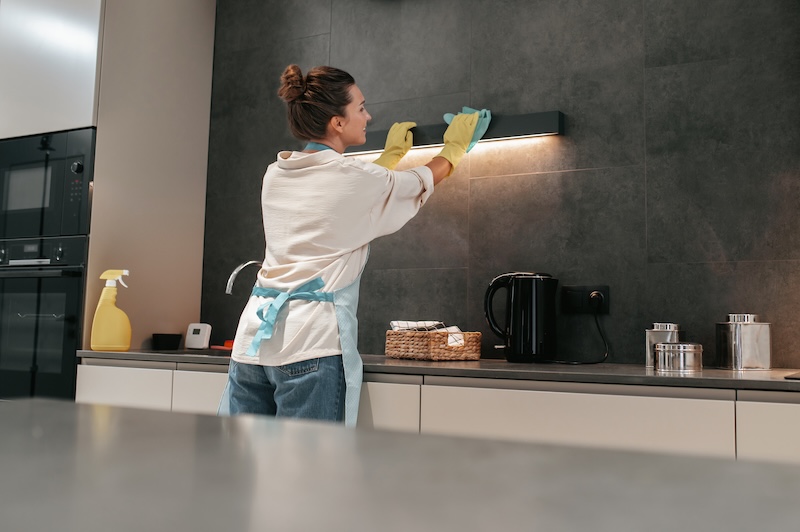
Many households book cleaning only when there’s an immediate need, before guests arrive, or when things visibly get out of hand.
There are no fixed routines. Every cleaning starts from scratch. Coordination takes time. Expectations have to be explained again and again.
What this costs
Effort per appointment increases. Results vary. Organization becomes more complicated, not easier.
Why long-term thinking helps
Regular cleaning creates a routine. The cleaner gets to know the household. Processes become smoother. Quality improves.
Costs remain stable. Every day life becomes calmer. Cleaning turns into support, not a constant issue.
In short: cleaning works best as regular support.
How to Avoid All Five Mistakes at Once
Good collaboration doesn’t start with the first cleaning appointment; it starts with clear decisions beforehand. By following a few basic principles, you can automatically avoid most difficulties:
- First, clarify expectations. Speak openly about what matters to you and what doesn’t. The more specific you are, the better the cleaner can work.
- Don’t compare prices alone. A low hourly rate says little about reliability, quality, and actual effort. What matters is the overall package.
- Legal security isn’t a side issue. Clarify employment models and insurance coverage from the start. This protects you in everyday situations and in emergencies.
- Open communication is just as important. Speak up early if something doesn’t fit, and listen when questions arise. That keeps small issues small.
- Plan long term. Regular cleaning creates routine, saves time, and delivers consistent results. Short-term solutions often seem easier,but rarely are.
Why Structured Platforms Can Help
Many of these principles are easier to implement when the framework is right. This is where structured platforms come in.
- They offer transparent pricing, so you know what to expect from the beginning,sometimes even before booking with Helpling. Reviews from other households help assess reliability and quality. Experiences are visible, not just promises.
- Another key aspect is security. Insurance and support are included, reducing legal uncertainty and organizational effort.
- Platforms don’t replace personal communication,but they create a clear foundation. Decisions become easier to understand. Risks are reduced. Collaboration starts in a more structured way.
Conclusion
Booking a cleaner isn’t a minor decision. It directly affects your daily life. How smoothly the collaboration runs rarely depends on the person alone,preparation usually makes the difference.
The five most common mistakes paint a clear picture: unclear expectations, too much focus on price, missing legal clarification, poor communication, and short-term thinking almost always lead to frustration. Not because someone does a bad job,but because the framework is missing.
The good news is simple: these mistakes can be avoided. With clear agreements. With realistic expectations. And by looking at the big picture rather than individual details.
A structured approach builds trust on both sides. The cleaner knows what’s expected. You know what you can rely on. That’s when household cleaning becomes what it should be: real relief.
Platforms like Helpling can support you in this process. They offer transparent pricing, reviews from other households, and clear legal coverage. This removes much of the uncertainty without taking the decision out of your hands.
In the end, a good cleaner doesn’t happen by chance. It’s the result of clear decisions. Those who invest the time upfront save time, money, and stress later.