


With a newborn, everyday life changes completely. Sleep, breastfeeding or bottle feeding, nappy changes, and soothing now take priority. There’s often little time left for housework, and even less energy.
At the same time, new tasks come along. Bottles need to be cleaned, the changing area needs regular attention, and stains quickly build up on baby clothes. Milk residue and crumbs around the sofa, dining table, and high chair don’t go unnoticed for long either.
So the goal doesn’t have to be a perfect home. What matters much more is a clean and safe home with a routine that works even on days with little sleep.
In this article:
- we’ve put together a checklist to help you organise the most important tasks by frequency.
- You’ll find out what should be done daily, what’s enough once a week, and which tasks you can easily hand over.
- Plus, there are simple time-saving tips that make cleaning less effort and give you more time for yourself and your baby.
1. The right routine for a clean home with a baby
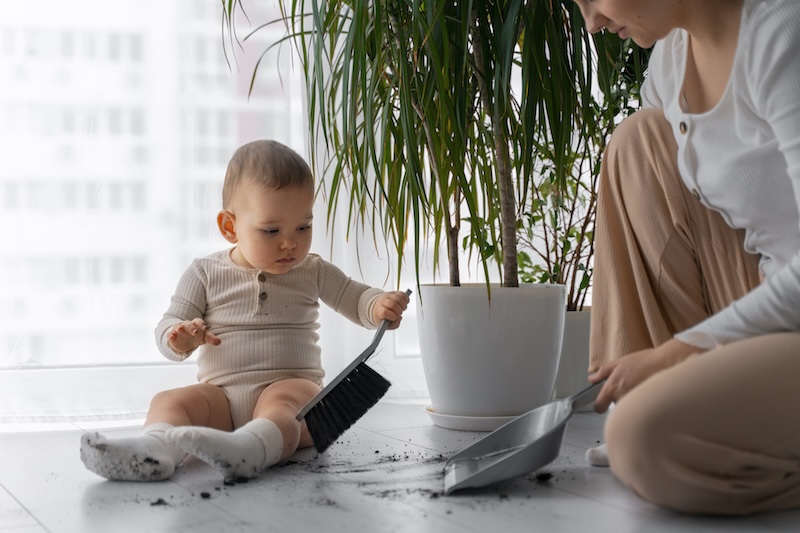
With a newborn, there’s often little time left for housework. Instead of cleaning the whole home every day, a simple rhythm helps: whatever gets dirty quickly, you deal with straight away. Everything else gets a fixed place in the weekly plan.
Daily: bottles, changing area and eating areas
- Bottles should be cleaned thoroughly after every use. Don’t forget teats, lids and other small parts. Whether and how often you sterilise the equipment depends on the manufacturer’s recommendations.
- The changing area also needs daily attention. Clean the changing mat when it gets dirty and wipe down the surrounding surfaces. The nappy bin should be emptied before unpleasant odours develop.
- Crumbs and milk residue quickly collect around the sofa, dining table or high chair. Remove visible dirt straight away and put used items back in their place.
Weekly: baby clothes, bedding and floors
Not every room needs to be cleaned equally often. During your weekly clean, focus on the areas where your baby spends a lot of time.
These mainly include:
- washing baby clothes, pillows and bedding, especially when there are spit-up stains or milk residue,
- vacuuming and mopping floors in play, living and eating areas,
- and removing visible dirt from the floor straight away.
- You should also clean frequently used surfaces such as door handles, light switches, armrests or the remote control more thoroughly.
A fixed weekly plan means you don’t have to keep these tasks in your head every day. That leaves more time for your baby and for your own breaks.
Monthly: check the pram, car seat and baby area
The pram and car seat are part of everyday life with a baby, but they’re easily overlooked when cleaning. That’s why a thorough check for crumbs, dust and other residue once a month is worthwhile.
- Vacuum the pram and remove visible dirt
- Clean removable covers according to the manufacturer’s instructions
- Wipe down handles and frequently touched surfaces
- Check the car seat for crumbs and dirt
- Clean the high chair and its gaps thoroughly
- Clean frequently used baby toys according to the manufacturer’s instructions
- Remove dust from shelves, windowsills, and other hard-to-reach places in the nursery
Be especially careful with the car seat. Only use cleaning products and methods permitted by the manufacturer so that materials and safety features aren’t compromised.
2. Baby-friendly cleaning: less fragrance, fewer harsh products
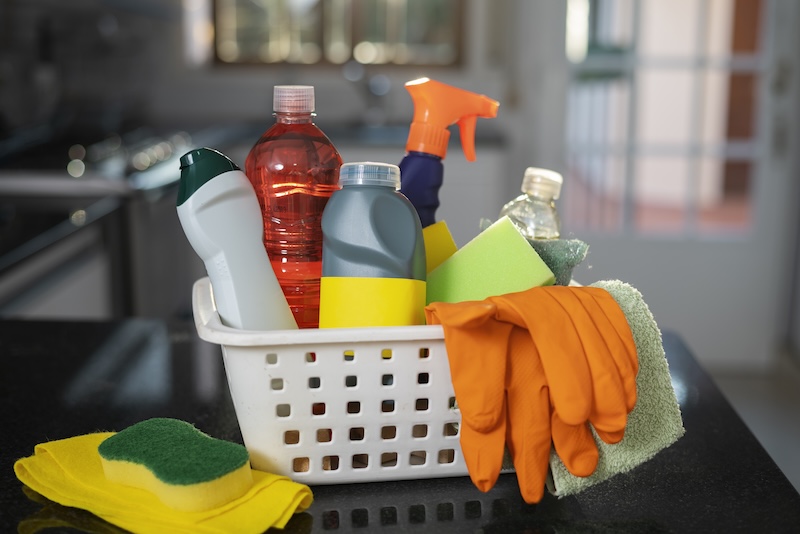
If you take a targeted approach to your daily cleaning, the right cleaning products matter too. Especially for surfaces around changing and feeding, you don’t need to use strong products.
In everyday life, pay particular attention to:
- using cleaning products that are as mild and fragrance-free as possible
- correct use according to the manufacturer’s instructions
- letting cleaned surfaces dry thoroughly
- a suitable detergent for baby clothes
- storing all cleaning products safely out of your child’s reach
A strong fragrance doesn’t make a surface any cleaner. So avoid products whose main purpose is to create an intense “fresh scent”.
Important: terms like “natural” or “organic” are not an automatic seal of approval for use in a household with a baby either. What matters is what a product is intended for and how it is used.
3. Keep the right cleaning supplies at hand
With a baby, every free minute counts. If you first have to look for microfibre cloths, cleaner or a dustpan, that short break is quickly over. That’s why it’s a good idea to keep the most important supplies together in a fixed, easy-to-reach spot.
A small cleaning kit usually only needs:
- microfibre cloths for surfaces and small messes
- a mild all-purpose cleaner
- detergent for baby clothes
- a small hand brush and dustpan
- absorbent kitchen roll for spilled liquids
This way, you can deal with small messes straight away without having to take the cleaning supplies out of the cupboard every time. The only important thing is to store cleaning products safely and out of your child’s reach.
4. A clean home with a baby: leave less lying around, tidy up faster
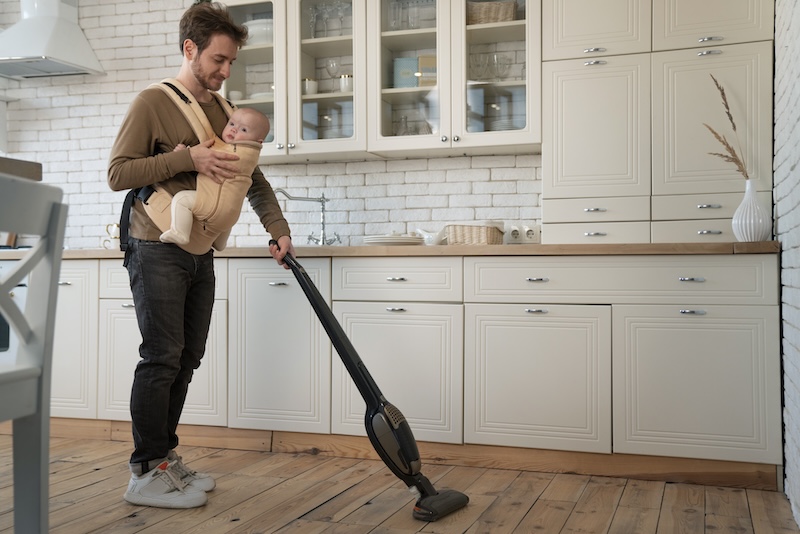
For a clean home with a baby, the rule is: the fewer things lying around, the faster a surface is clean. Clothes, toys, bottles and other baby items pile up every day, especially in the nursery, kitchen and living room.
Simple storage solutions can save you a lot of work when tidying up:
- Use baskets for toys and cuddly toys
- Set up a dedicated box for baby accessories such as bibs, muslin cloths or small toys
- Put baby clothes straight into their own laundry basket
- Keep things you need several times a day within easy reach
- Keep surfaces such as the changing table and dining table as clear as possible
Not everything has to be perfectly organised. What matters is that every item has a fixed place and that you can put it back there quickly.
A quick tidy-up round in the evening is especially helpful. Five minutes is often enough to gather up toys, put bottles away and clear surfaces for the next day. That way, you don’t start your morning facing a pile of odds and ends.
5. Hand over the deep cleaning and gain time for your family
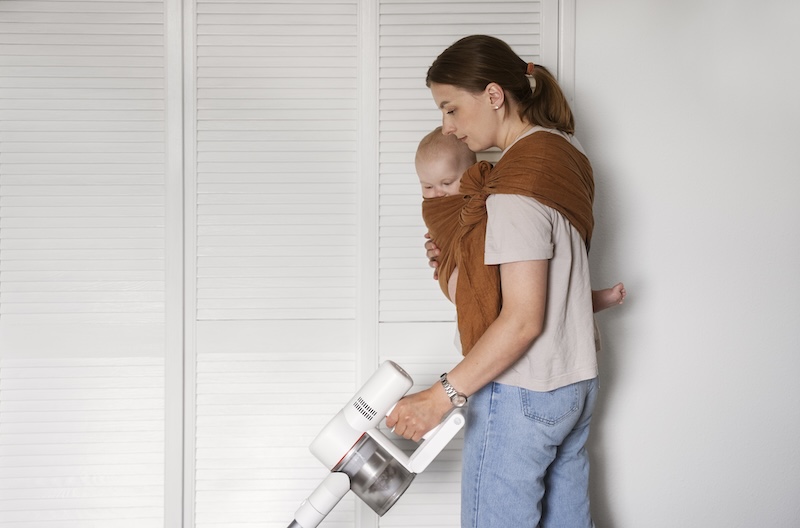
With a newborn, the question of where your time goes changes too. A thorough clean of the kitchen, bathrooms, floors and other areas can easily take several hours. Especially in the first few months, the time and energy for this are often lacking.
You don’t have to take on these tasks entirely yourself. A professional cleaner can take over the jobs that take up a lot of time in particular:
- thoroughly vacuuming and mopping floors
- cleaning the bathroom and kitchen
- removing dust from furniture and hard-to-reach surfaces
- removing stubborn dirt
- cleaning areas you hardly have time for in everyday life
A weekly or fortnightly appointment can already make a big difference. The small tasks around bottles, the changing area and the feeding area stay with you. You can also fit baby laundry and proper care of your bedding into your daily routine yourself, while someone else takes over the time-consuming deep cleaning.
Through Helpling, you can find a suitable cleaner for your household and schedule regular cleaning appointments. This isn’t about you not being able to manage the housework. Your time is simply more valuable somewhere else right now: with your baby, your family and yourself.
Conclusion
A clean home with a baby doesn’t have to be perfect. What matters is that the most important areas stay clean and that cleaning fits your new everyday life.
Focus on what really needs doing: bottles, the changing area and feeding areas belong in your daily routine. Baby clothes, floors and frequently touched surfaces can go into your weekly plan. For the pram, car seat, high chair and baby area, a thorough check at longer intervals is enough.
Small changes make a difference too. If cleaning products and supplies are within easy reach, things have a fixed place, and you remove visible dirt straight away, housework becomes easier. You don’t have to sacrifice every free minute for deep cleaning.
A professional cleaner can take specific tasks off your hands. Through Helpling, you can find regular support for your household and gain more time for what really counts in this special phase: your baby, your family, and a little time for yourself.