
Cats bring a lot of joy into the home, but unfortunately also a lot of hair and litter. Cat hair collects on the sofa and carpet, cat litter ends up in the hallway, and unpleasant odours quickly develop around the litter box.
The good news: with the right routine, you can significantly reduce the cleaning effort. The 9 tips in this article show you:
- how to remove cat hair faster,
- how to prevent odours,
- how to treat urine stains properly,
- and which cleaning products are the most cat-friendly and effective.
Tip 1: Clean the litter box daily and tackle odours at the source
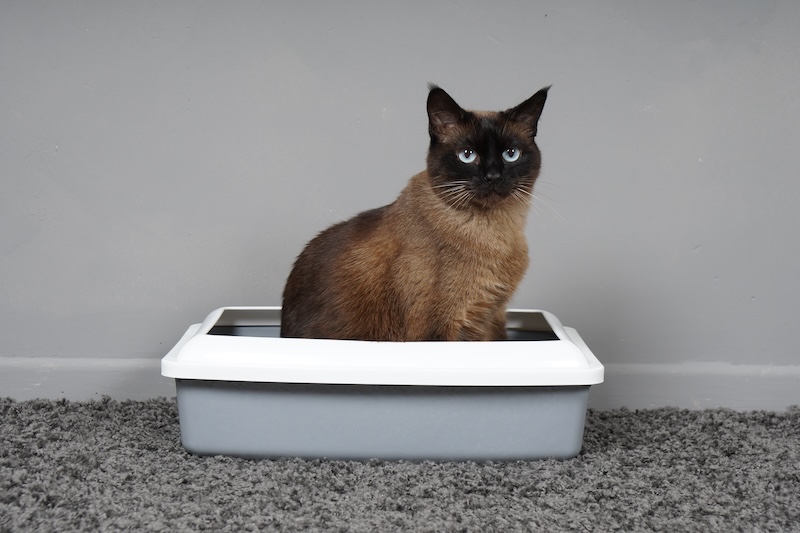
The most important step towards a cleaner home with cats starts with the litter box.
- Ideally, remove faeces and clumped litter every day.
- This stops odours from settling in and prevents your cat from avoiding a dirty litter box.
You should also pick up any scattered litter straight away. A small litter mat in front of the litter box catches many of the granules before they spread through your home. This saves you time when vacuuming later.
But how often should you change the cat litter?
- That depends on the type of litter and the number of cats.
- Waste should be removed daily.
- The litter is replaced completely at regular intervals, and the empty litter box is cleaned thoroughly at the same time.
- Don’t forget the rim, the lid and the floor around the litter box.
If the litter box is damaged or heavily worn, you should replace it. Disposing of an old litter box is also part of a hygienic cleaning routine.
Tip 2: Remove cat hair where it collects

Cat hair on the sofa upholstery, in bed or on a favourite blanket is part of everyday life for many cat owners. Instead of constantly chasing after every single hair, it pays to keep your cat’s favourite spots clean in a targeted way.
- For quick clean-ups, a lint roller, a slightly dampened rubber glove or a handheld vacuum is often enough. These let you remove hair quickly before it spreads across furniture and textiles.
- Once a week, you should vacuum your home thoroughly, without forgetting carpets, corners and the areas under furniture.
- Regular brushing is also part of cat care. It removes loose hair directly from the coat and reduces how much ends up on your sofa later.
By the way: a professional cleaner can not only lend you a hand with the cleaning, but also give you more practical cleaning tips to keep your daily cleaning under control with little effort.
Tip 3: Invest in a good vacuum cleaner

Cat hair tends to get caught in carpets, upholstery and other textiles. A good vacuum cleaner with a suitable pet hair attachment can therefore make a big difference.
Pay particular attention to these points when vacuuming:
- Choose a vacuum cleaner with strong suction power and a pet hair attachment.
- Vacuum heavily used areas such as the sofa, carpets and floors at least twice a week.
- Work slowly and thoroughly on upholstery so that stubborn hair comes loose more easily.
- Don’t forget hidden spots. A particularly large amount of hair collects under the bed, behind the sofa and along skirting boards.
- Empty the dust container regularly so the suction power doesn’t drop.
If you also brush regularly and remove hair from your cat’s favourite spots in between, vacuuming takes significantly less effort.
Tip 4: Place the litter box in the right spot
The location of the litter box has more influence on the cleanliness of your home than you might first think. In the right spot, scattered litter is easier to remove and the litter box is easier to keep clean.
Pay attention to these points when choosing the location:
- Choose a quiet place where your cat won’t be disturbed.
- Don’t place the litter box directly next to food or water bowls.
- A bathroom can be practical because the floor is easy to clean. However, the door must remain accessible to your cat at all times.
- A utility room or a quiet corner can also be suitable.
- If you have several cats, it can make sense to have several litter boxes.
- A litter mat in front of the litter box catches litter that gets carried out.
The best place for the litter box is somewhere you can reach quickly and clean every day. This makes cleaning a fixed habit and prevents odours or litter from building up over time.
Tip 5: Clean carpets properly so hair and litter don’t get stuck

Carpets are another hotspot and very cosy for cats. Unfortunately, carpets also quickly collect hair, dust and cat litter. Litter in particular should be removed as soon as possible, before it gets walked deeper into the fibres.
For a cleaner home, the right care is key:
- Vacuum carpets thoroughly and regularly, especially in your cat’s favourite spots.
- Remove cat litter immediately if possible, before it settles into the fibres.
- Be especially careful with long-pile carpets. When cleaning shag rugs, for example, the right vacuuming technique and gentle treatment of the fibres are essential.
- When cleaning your wool rug, you should also avoid harsh cleaners and follow the care instructions for the material.
- Always test new cleaning products on an inconspicuous spot first.
If you’re unsure about delicate carpets or don’t want to do the deep cleaning yourself, you can turn to a professional cleaner. Professionals know how to clean carpets and special textiles, such as sheepskins, without putting unnecessary strain on the material.
Tip 6: Deal with urine stains correctly
If your cat urinates outside the litter box, you should treat the stain as quickly as possible. What matters is not only the visible discolouration. The odour residues must also be removed so the spot doesn’t become interesting to your cat again.
- Enzyme cleaners are particularly suitable for this. They can break down organic residues that conventional cleaners may leave behind. Apply the product according to the manufacturer’s instructions and leave it to work for long enough.
- On carpets and upholstered furniture, test the cleaner on an inconspicuous spot first. Repeated urination should also not be treated purely as a cleaning problem. In this case, it makes sense to have the cause investigated.
Tip 7: Use the right cleaning products
When it comes to cleaning products, less is often more. With cats in particular, you should avoid products that may be convenient for people but can be problematic for animals.
- Don’t use bleach around areas your cat regularly comes into contact with.
- Cleaners containing ammonia are also not a good choice, especially when cleaning urine stains.
- Be careful with essential oils. “Natural” doesn’t automatically mean a product is suitable for cats.
- Use mild cleaning products suited to the specific task wherever possible.
- Let freshly cleaned surfaces dry completely before your cat walks or lies on them again.
This way, you not only keep things clean but also create an environment in which your cat can move around safely.
Tip 8: Develop a simple cleaning routine for a cleaner home
A good cleaning routine should take work off your hands, not create more of it. So divide your tasks by time required and frequency.
- Daily: Set aside a few minutes for things that quickly become visible or unpleasant. These mainly include the litter box, bowls and loose hair.
- Weekly: Group the more thorough tasks together on a fixed day. That way, you don’t have to think every evening about what still needs doing.
- Monthly: Reserve a slot for the areas that are easily forgotten in everyday life. A fixed date in the calendar is often enough.
Once you have established this routine, cleaning becomes more predictable. Your home stays clean without you constantly feeling like you’re tidying up after your cat.
Tip 9: Get help from the professionals
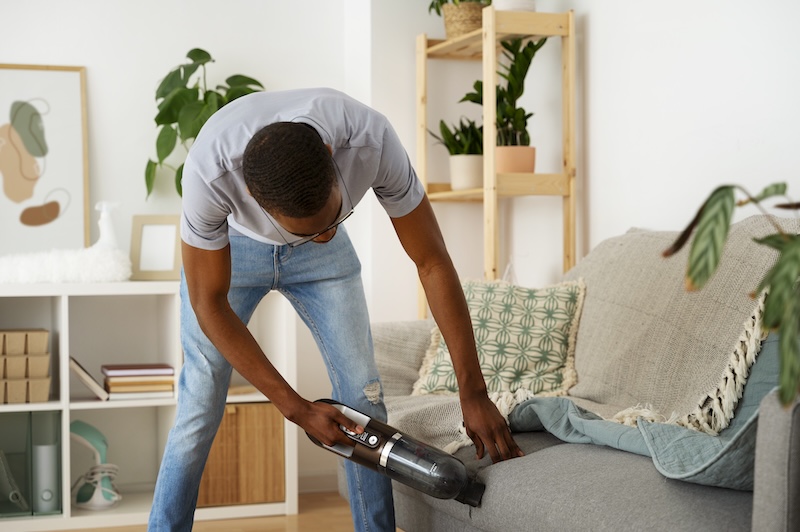
Even with a good daily cleaning routine, a thorough, professional clean is worthwhile from time to time in a home with cats. Cat hair, odours and dust in particular tend to collect in places that are easily overlooked in everyday life.
At Helpling, you’ll find professional cleaners who take care of the areas that take up a particularly large amount of time:
- thoroughly cleaning carpets and upholstery
- removing hair and dust under furniture and in hard-to-reach corners
- thoroughly cleaning the kitchen and bathroom
- removing stubborn dirt
- cleaning areas that often get neglected in daily cleaning
Regular cleaning can be especially helpful if several cats live in the household or if there’s little time left for housework. That way, your home stays fresh and clean between the small daily tasks.
Conclusion
With the right routine, it’s easy to keep a home with cats clean. If the litter box, cat hair and any urine stains are dealt with properly and regularly, many typical problems don’t arise in the first place.
Still, you don’t always have to do the deep cleaning yourself. At Helpling, you can book a professional cleaner to take care of carpets, upholstery, floors and hard-to-reach areas. This is especially practical if several cats live in the household or if there’s little time for a thorough clean in everyday life.