
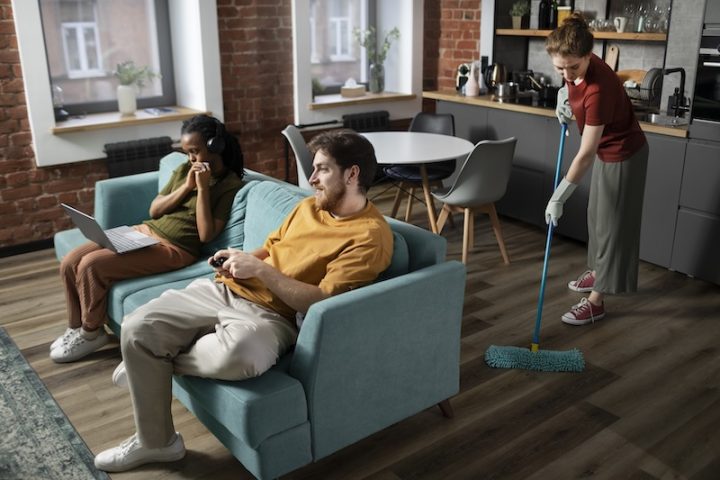

Imagine the following situation: You book a cleaner for a single appointment. The price is 30 euros per hour. That seems fair. Maybe even cheap.
A few weeks later, you book again. Again, 30 euros per hour. Same price. Same apartment. And yet the cleaning takes longer than last time.
This is precisely where the biggest mistake in comparing costs lies.
Many households only compare the hourly rate. It is not the price per hour that determines the cost, but the time it takes. An apartment that hasn’t been cleaned for several weeks needs more effort. Dust settles. Fat in the kitchen becomes stubborn. Lime is produced in the bath. Each additional shift costs time.
Cleaning is not a linear performance. Twice as much dirt doesn’t mean twice as much time. It often means significantly more. The hourly price remains the same. The total costs are increasing.
That’s why one-off cleanings seem cheaper at first glance. In reality, many households pay more in the long run without consciously realizing it.
Once you leave the hourly price behind, it quickly becomes clear why recurring cleaning is cheaper in the long run. It’s not about discounts or tricks, but about time, effort, and routine. These are precisely the factors we are now looking at step by step.
In the next sections:
- See concrete cost comparisons between individual appointments and regular cleaning
- Learn how the time required changes using realistic examples
- Learn in which households recurring cleaning saves particularly more
- Understand why providers often charge less for recurring appointments
This will give you a clear picture of when recurring cleaning is financially worthwhile and why it is the more relaxed solution for many households. Let’s go!
What is really paid for one-off cleanings
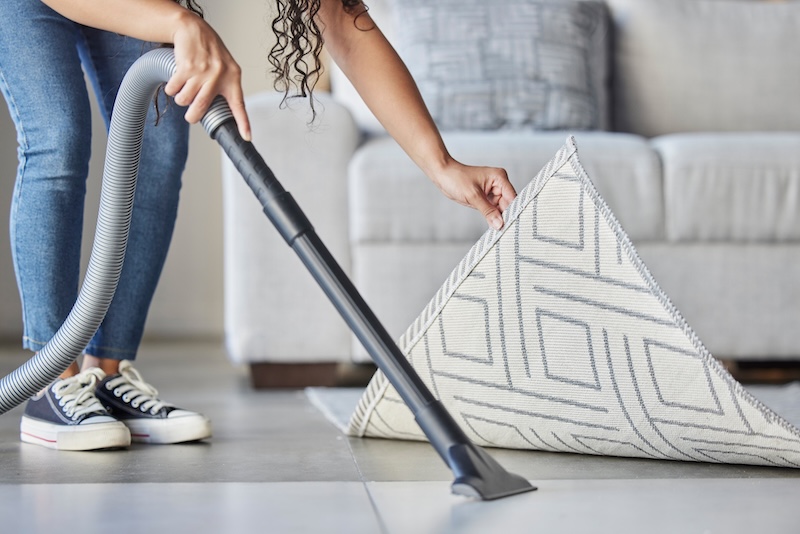
At first glance, one-off cleanings seem manageable. You book an appointment, pay an hourly rate, and get the topic done for now. However, this is where the difference in a cleaning lady’s costs begins:
- With a single cleaning, each cleaning starts at zero. The cleaner doesn’t know the household. It must orient itself, set priorities, and assess the situation. That takes time. You pay for this time.
- Added to this is the greater effort required. If it hasn’t been cleaned for a while, dirt has settled. Floors need multiple passages. The kitchen and bathroom demand more attention. Everything takes longer than necessary.
- Another point is the lack of routine. Without regular appointments, there are no well-rehearsed processes. Every visit feels like a fresh start. This directly affects the duration of the cleaning.
Many households also underestimate the framework conditions:
- Individual appointments often have minimum booking times. Two or three hours are reached quickly, even if the actual need were less. Short-term bookings are also not always possible or involve surcharges.
- However, if the hourly price is considered in isolation, it still appears attractive: the price per hour remains the same. The time required is increasing. In the end, you pay more without it being immediately noticed.
One-off cleanings are therefore rarely efficient. They solve an acute problem but do not prevent new ones. That’s exactly what makes them more expensive in the long run than regular cleaning.
Why recurring cleaning is more efficient
After one-off cleanings, it becomes clear where time is lost. Recurring cleaning reverses this exact effect. The effort is reduced. The work becomes more predictable. And that’s exactly what makes it cheaper.
Routine saves time
- Recurring appointments create processes. The cleaning lady knows the apartment. Paths are clear. Handholds are seated. There is no need to decide every time what to start with.
- Well-known rooms save time. The kitchen is familiar. The bathroom, too. There are no surprises. As a result, work is done faster without compromising quality.
- Clear priorities are added. With regular cleaning, it is known what is important and what can wait. This prevents detours and unnecessary additional work.
Less dirt, less effort
- The greatest advantage lies in the state of the household. If cleaning is done regularly, dirt won’t settle in the first place.
- Fat in the kitchen remains superficial. Lime in the bath is removed early. Floors need fewer passages. This saves time on every appointment.
- Faster cleaning does not mean hasty cleaning. On the contrary. The uniform state ensures a more constant result. The apartment feels permanently maintained, not just shortly after the appointment.
This is precisely where the cost advantage arises. The hourly rate often remains the same or decreases slightly. The time required is decreasing. This makes recurring cleaningmore efficient and ultimately cheaper than one-off cleanings.
By the way: Through platforms like Helpling, you can not only make one-off cleanings, but also book a cleaner who handles regular cleanings.
Example cost comparison: recurring cleaning vs. individual booking
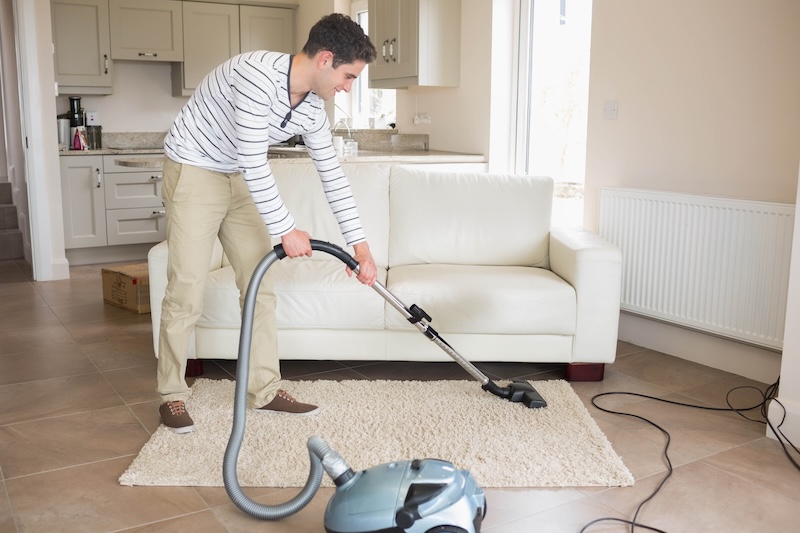
Now that it is clear why recurring cleaning works more efficiently, it is worth looking at concrete figures. Only in comparison does it become clear how strongly intervals affect monthly costs.
The following examples are based on typical bookings through cleaning platforms such as Helpling in Germany. The price ranges mentioned are based on the usual hourly prices and experience values from regularly booked households.
Scenario 1: Small apartment, irregular cleaning
Imagine an apartment of about 50 square meters. Cleaning is done once or twice a month, usually when it’s visibly necessary.
The condition is changeable. Sometimes it’s quick. Sometimes it takes considerably longer.
Typical are:
- Time required per appointment: about 3 hours
- Usual hourly rate for individual appointments: approx. 30 euros
- Monthly costs for two appointments: around 180 euros
The high time required is due to a lack of routine and increased pollution. The kitchen and bathroom need more attention. Floors need multiple passages.
Scenario 2: Small apartment, weekly cleaning
Now the same apartment. This time with weekly cleaning.
The condition remains stable. Surfaces are well-maintained. Dirt does not settle.
Typical include:
- Time required per appointment: approximately 1.5 to 2 hours
- Usual hourly rate with regular booking: approx. 25 euros
- Monthly costs for four appointments: around 150 to 200 euros
Although cleaning is more frequent, the time required per appointment remains lower. The overall effort is better distributed.
Scenario 3: Sporadic cleansing in everyday family life
More dirt is generated in family households. The kitchen, bathroom, and floors are subjected to greater stress. Sporadic cleaning usually means a lot of effort.
Typical tasks have:
- Longer appointments of 4 hours or more
- Additional services, such as an oven or a refrigerator
- Monthly costs quickly exceed 300 euros
The household gets cleaned in some places. However, the situation quickly deteriorates again.
Scenario 4: recurring cleaning in the family household
The effect is amplified in households with higher usage, and families particularly benefit from regularity. With weekly or bi-weekly cleaning, the household remains in balance. Tasks are evenly distributed.
Typical tasks are:
- Shorter, predictable dates
- Fewer additional servicesare needed
- Monthly costs are often between 250 and 350 euros
The crucial difference is not the hourly price, but the consistent effort. Planning becomes easier. Costs remain stable.
Benefits of regular cleaning
Financial differences are an important factor. However, in everyday life, the benefits of a cleaning lady or recurring cleaningare evident in completely different areas. Many of them only really become noticeable over time.
Constant cleanliness instead of stress
- Recurring cleaning prevents the typical short-term large-scale actions. There is no longer a point where everything has to be done at once.
- The budget remains in a stable state. This ensures peace in everyday life. Cleanliness becomes a matter of course, not a task that is constantly kept in mind.
- Many households report that their sense of housing is changing significantly. The apartment feels well-maintained throughout, not just right after an appointment.
Better availability and planning
- Those who book regularly often benefit from stable time slots. Appointments are firmly scheduled. Changes are easier to vote on.
- The failure rate is also lower. Regular appointments are a higher priority for cleaners than one-off cleanings. This increases reliability in everyday life.
- This advantage is particularly evident when demand is high.
Long-term value retention
- An often underestimated aspect is the care of materials. Recurring cleaning protects surfaces from wear and tear.
- Soils benefit from even maintenance. Dust and dirt otherwise act like fine sandpaper. Surfaces in the kitchen and bathroom remain intact longer if deposits are removed early.
- In the long term, this saves costs. Repairs, intensive deep cleaning, or early replacement can be avoided.
Who is recurring cleaning particularly worthwhile for?
The benefits of recurring cleaningare clear. However, this model doesn’t fit every household equally. The benefits are particularly evident where everyday life, time, and planning intertwine.
#1 Households with little time
Working people notice the difference quickly. If you have little free time, you don’t want to spend it organizing or doing spontaneous cleaning.
- Recurring cleaning takes a fixed task out of everyday life. The head becomes free. The budget runs in the background without the need for constant re-planning.
- Families also benefit greatly. More people mean more use. More use means more effort. Recurring cleaning distributes this effort evenly and prevents it from accumulating.
#2 Households with clear routines
A fixed weekly schedule makes recurring cleaning particularly efficient. Dates are easy to schedule. Processes interlock.
- Everyday life becomes more predictable. A structure emerges that proves itself. Cleaning is not a nuisance, but part of the routine.
This is a noticeable advantage, especially in households where many appointments need to be coordinated.
#3 Households that want to keep costs stable
recurring cleaningensures consistent monthly costs. There are no surprises. No sudden higher effort. No spontaneous additional appointments.
Expenditure is easy to plan. This creates security, especially during prolonged use.
If you value clarity and want to avoid unpredictable costs, recurring cleaningwill improve your long-term performance.
Summary
The comparison clearly shows that it is not the hourly price that determines the costs, but the effort that determines the time. One-off cleanings seem flexible, but often lead to higher time requirements, more organization, and increasing overall costs. Recurring cleaning starts right here.
Due to fixed processes, lower pollution levels, and better planning, the time required per appointment is noticeably reduced. This makes recurring cleaningmore efficient and, in many households, cheaper in the long term. At the same time, a stable state is created that reduces stress and noticeably relieves the burden on everyday life.
Households with little time, clear routines, or the desire for stable monthly costs particularly benefit from recurring appointments. The apartment remains well-maintained without the need for constant re-planning or response.
It is not important to decide against one-off cleanings in principle. They are useful for moves, deep cleaning, or special situations. It is crucial to choose the right model for your own everyday life.
Platforms like Helpling offer flexibility here. They allow for both recurring cleaningand one-off cleanings, transparently calculated and easy to plan. This allows you to choose exactly the cleaning interval that suits your household.
In the end, if you have regular cleaning, you won’t just save money. He gains time, structure, and a permanently good feeling of living.