
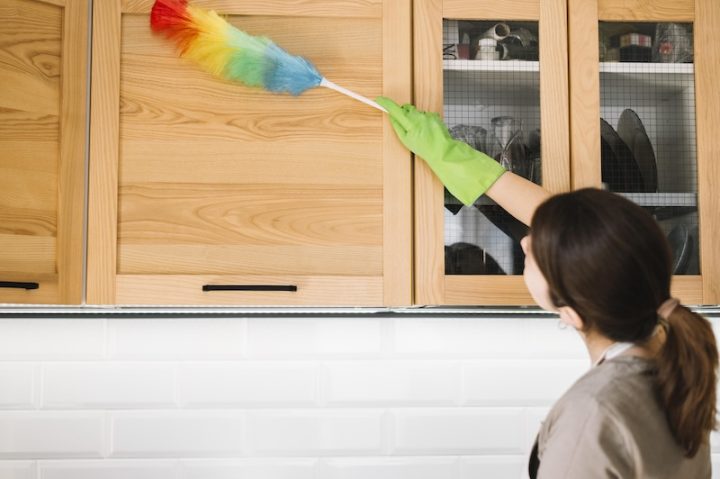

It never seems to end. For 19% of Germans, dusting is the most frustrating household chore. It is no surprise. No sooner have you wiped it away than a new layer of dust settles on your furniture. So what actually helps against those grey particles? How often should we dust, and is a dusty radiator really an energy drain? Helpling cleaning experts clear up the biggest myths about dust once and for all.
1. Dust Comes from Outer Space: True, But…
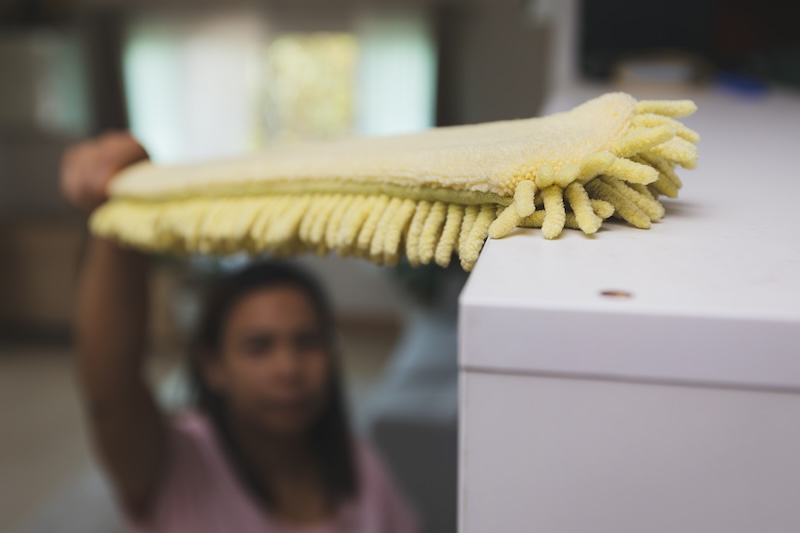
It is true. Household dust contains tiny remnants of meteorites. Even the Sahara finds its way into our homes. Air currents carry desert particles thousands of kilometers across to Europe. In that sense, dusting becomes a kind of expedition. However, around 70 percent of household dust consists of skin flakes and common fibers from clothing and textiles such as blankets.
2. Open Windows Let More Dust into Your Home: True
Open windows are an open invitation for floating dust particles. If you ventilate your home frequently throughout the day, you should expect a noticeable layer of dust on your furniture.
The solution is simple. Open all windows wide in the morning and evening for about ten minutes. This method, known as shock ventilation, allows enough fresh air into the rooms while giving dust only a short time to settle.
3. Dusting Works Best with a Damp Cloth: False
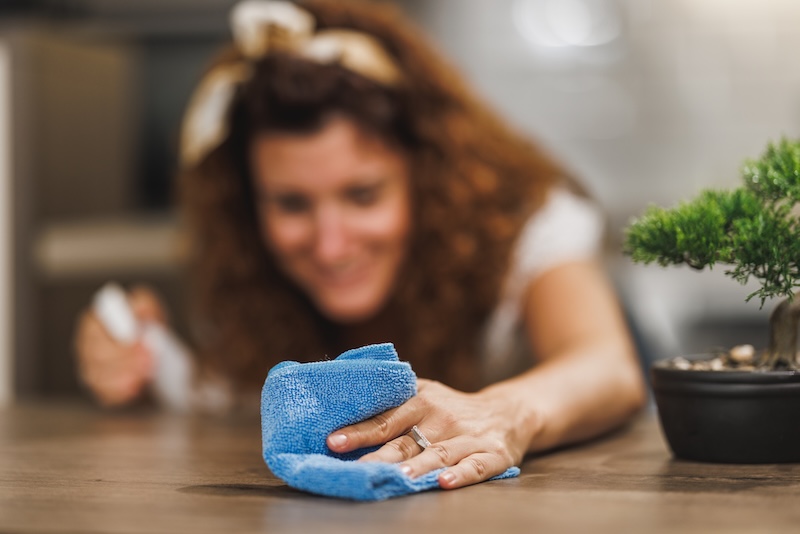
Whether to use a dry or damp cloth is often debated. What many people do not know is that wet cloths tend to smear dust rather than remove it.
A dry, anti-static microfiber cloth, on the other hand, attracts dust particles like a magnet. Instead of being stirred up, the particles are captured and held by the cloth.
4. Curtains Are the Biggest Dust Collectors: False
White fabric curtains often turn grey over time, but they are not the main culprits. The biggest dust collectors are electronic devices such as televisions, laptops, and stereo systems.
Because they are constantly electrically charged, they attract dust from the air. An anti-static spray can help here. It creates a protective layer on surfaces so that dust settles less quickly.
5. We Are the Main Cause of Dust: True
Our own movements keep dust constantly in motion. For example, if two people walk across a carpet for one minute, they can stir up around two milligrams of dust. That is roughly equivalent to the smoke from half a cigarette.
What many people do not realize is that vacuuming does not always remove dust completely. A dirty filter can actually release dust back into the air. It is therefore important not only to change the vacuum bag every six weeks but also to clean the filter regularly.
6. Dust Makes Us Sick: False

Dust particles themselves are not generally harmful to health. The real concern comes from dust mites that live within them. Up to 10,000 mites can be found in just one gram of household dust.
Their droppings in particular can trigger allergic reactions. People with allergies should choose pillows, blankets, and carpets made from synthetic materials such as polyester. These are easier to care for and can be washed more frequently.
7. Dusting Once a Week Is Enough: True
Dusting once a week is usually sufficient. On average, up to six milligrams of dust can accumulate per square meter each day, but it typically becomes visible only after about a week.
A helpful tip is to add a drop of fabric softener to a microfiber cloth and wipe down surfaces after dusting. Fabric softener has an anti-static effect, which helps repel new dust.
8. Indoor Plants Create More Dust: False
If a layer of dust regularly settles on your plants, it does not mean they are producing dust. Plants actually increase humidity in their surroundings, causing dust to bind to tiny water particles. This makes it heavier, so it falls directly onto the leaves.
It is still important to dust your plants once a week, especially if they are placed near windows.
9. Dust Is Useless: False

Without those grey particles, the world would be out of balance. Dust contains pollen that travels through the air and helps pollinate plants.
In addition, without dust particles, there would be no cloud formation and therefore no precipitation. Without rain, there would be no plants, no animals, and no life as we know it.
10. A Dusty Radiator Reduces Heating Efficiency: True
Dust can cost you money. A dirty radiator can reduce heating performance by up to 30 percent. It is therefore important to clean it before and after the heating season.
Here is a simple method. Place a damp cloth behind the radiator and use a hairdryer to blow along its surface. The damp cloth will catch the dust particles that are stirred up. This allows you to clean even the hard-to-reach areas and remove hidden dust buildup effectively.