
Having your own pool in the garden is a dream for many homeowners. Not only does it offer welcome refreshment on hot summer days, but it is also a place of relaxation and enjoyment for the whole family. However, to enjoy swimming to the fullest, you should clean your pool regularly. A clean pool not only looks appealing but is also crucial for the health of swimmers.
Whether you have an in-ground pool or an above-ground inflatable pool, we have compiled practical tips and proven methods for you in this article. This will help you keep your pool in perfect condition at all times. From daily care to special cleaning techniques, we provide you with all the tools you need to maintain high water quality and make pool maintenance easy and effective.
Dive into our comprehensive guide and learn how to optimally maintain your pool to ensure a clean and safe swimming experience at all times.
Pool cleaning: Tips and tricks for a clean water surface
If you own a pool, you know how important it is to keep it clean. A clean pool not only looks better, but is also more hygienic and safer for swimmers. Cleaning your pool should therefore be part of your basic summer cleaning routine!
First of all, it is important to check the pH value of the water regularly and adjust it if necessary. A pH value between 7.2 and 7.6 is ideal for a pool. You can use pH test strips to measure the pH value and pH regulators to adjust it.
Another important factor is filtration. The pool filter should be cleaned regularly to ensure that it works effectively. Depending on the type and size of the pool, it may be advisable to clean the filter daily or weekly.
Basics of pool maintenance

To ensure that your pool remains clean and hygienic, there are a few basics of pool maintenance that you should keep in mind:
- Check the pH level of the water: The pH level of the water should be between 7.2 and 7.8 to ensure that the water is not too acidic or too alkaline. Use a pH tester to check the pH level of the water and adjust it if necessary.
- Clean the skimmer basket: The skimmer basket catches leaves, twigs, and other debris before they enter the filter. Empty the skimmer basket regularly to ensure that it does not become clogged.
- Use a pool cleaner: A pool cleaner can help keep your pool clean by removing debris such as leaves, dirt, and insects from the water. There are several types of pool cleaners available, including automatic and manual models.
- Clean the filter: The filter is an important part of the pool cleaning system and removes dirt, bacteria, and other contaminants from the water. Clean the filter regularly to ensure that it works effectively.
- Use chlorine: Chlorine is a commonly used disinfectant that helps kill bacteria, algae, and other contaminants in the water. Use chlorine in the recommended amount to ensure that your pool remains hygienic.
Necessary cleaning agents and tools
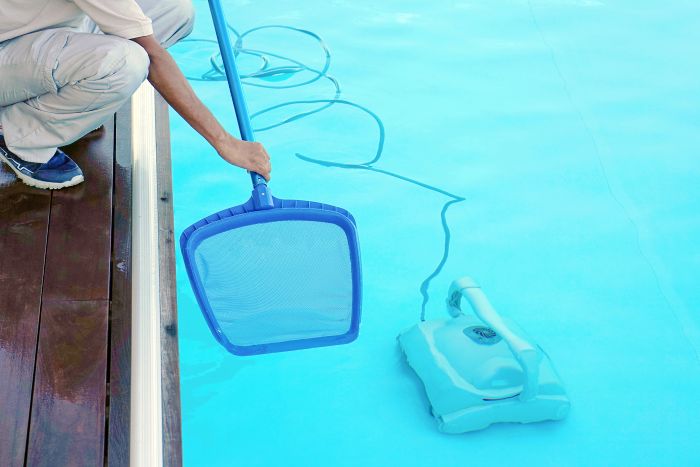
To keep your pool clean, you will need some cleaning agents and tools. We have compiled a list of the most important items for you:
Pool chemicals
- Chlorine: A disinfectant that kills bacteria and algae.
- pH regulator: An agent that stabilizes the pH value of the water.
- Algae control agent: An agent that kills algae and prevents them from spreading in the pool.
- Shock treatment agent: An agent that quickly increases the chlorine content to kill bacteria and algae.
Cleaning equipment
- Pool brush: A brush that you can use to clean the pool floor and walls.
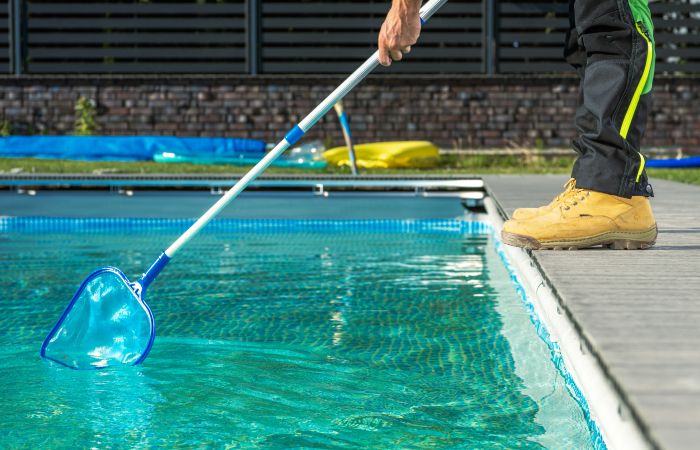
- Pool net: A net that you can use to remove leaves, insects, and other debris from the pool.
- Pool vacuum cleaner: A device that you can use to vacuum the pool floor and walls.
Personal protective equipment
- Gloves: Protect your hands from chemicals.
- Safety goggles: Protect your eyes from chemicals.
- Respirator: Protect your lungs from chemicals.
Regular cleaning routines
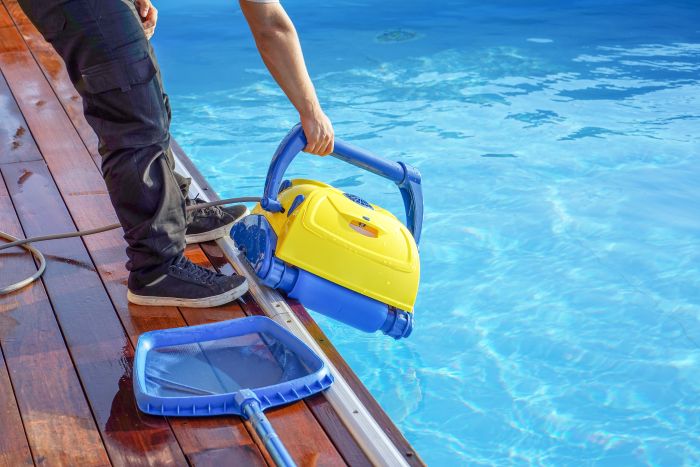
If you own a pool, it is important to carry out regular cleaning routines to ensure that the water remains clean and hygienic:
1. Surface cleaning
The surface of your pool should be regularly cleaned of leaves, insects, and other debris. Use a net or skimmer for this. If you use a skimmer, make sure it is clean to ensure optimal cleaning.
2. Scrubbing the floor and walls
It is also important to scrub the floor and walls of your pool regularly to remove debris and dirt. You should use a brush that is suitable for your pool floor. Avoid hard brushes that can damage the pool floor or cause scratches.
3. Filter cleaning
Your pool filter is an important part of your cleaning routine. Make sure you clean the filter regularly to prevent clogging. The frequency of cleaning depends on the size of your pool and the type of filter. Check the instructions for your filter to find out how often it should be cleaned.
Cleaning different types of pools
When cleaning pools, it is important to consider the specific needs of different types of pools. Above-ground pools and in-ground pools each have their own challenges and require different approaches to keep them clean and well-maintained.
- Above-ground pools are generally easier to install and maintain, but require regular care to extend their lifespan and maintain water quality. It is particularly important to check and clean the filter and pump regularly to ensure they are working effectively. In addition, the pool floor and walls should be vacuumed frequently to remove dirt and debris. A pool cover is also recommended to protect the pool from contamination when it is not in use.
- In-ground pools often require more intensive maintenance as they are more susceptible to algae growth and contamination. In addition to regularly vacuuming the pool floor and walls, you should also continuously monitor the water quality and add chemicals as necessary to maintain the pH and chlorine levels. Good water circulation is crucial, so the pump should run for several hours every day. It is also advisable to carry out a thorough deep cleaning once a year to remove stubborn deposits from the pool.
Deep cleaning and algae control

When it comes to keeping your pool clean, deep cleaning and algae control are important steps. Here are some tips on how to deep clean your pool and remove algae.
Shock chlorination
Shock chlorination is an effective way to deep clean your pool. This process involves adding a large amount of chlorine to the pool to kill bacteria and algae. To perform shock chlorination, follow the instructions on the chlorine product packaging carefully. Don’t forget to check and adjust the pH level of the pool before performing shock chlorination.
Algae removal
Algae can be a major problem in your pool. To remove algae, you should first check the pH level of the pool and make sure it is between 7.2 and 7.8. Then you should use an algae remover that is suitable for your type of pool. Follow the instructions on the product packaging carefully to ensure that you use it correctly.
If you have persistent algae problems, it may be necessary to empty your pool and clean it thoroughly. Don’t forget to refill the pool with fresh water after cleaning and adjust the pH level.
Maintaining water chemistry
When it comes to the cleanliness and hygiene of your pool, water chemistry is an important factor. To ensure that your pool remains clean and healthy, it is important to maintain the water chemistry.
pH adjustment
The pH of the pool water should be between 7.2 and 7.8. If the pH is too low, it can cause eye irritation and corrosion. If the pH is too high, it can lead to scale buildup and ineffective chlorination. Use a pH tester to measure the pH and add pH Plus or pH Minus as needed to correct the pH.
Chlorination
Chlorine kills bacteria and algae and keeps the pool water clean and clear. The ideal chlorine level is between 1.0 and 3.0 ppm (parts per million). Use a chlorine tester to measure the chlorine level and add chlorine as needed to maintain the level. There are different types of chlorine products, including granules, tablets, and liquid chlorine.
Alkalinity and hardness
The alkalinity of the pool water should be between 80 and 120 ppm, while the hardness should be between 200 and 400 ppm. Optimal alkalinity and hardness ensure better water quality and prevent corrosion. Use an alkalinity and hardness tester to measure the levels and add an alkalinity increaser or a hardness increaser as needed to correct the levels.
Preparing the pool for the Winter season
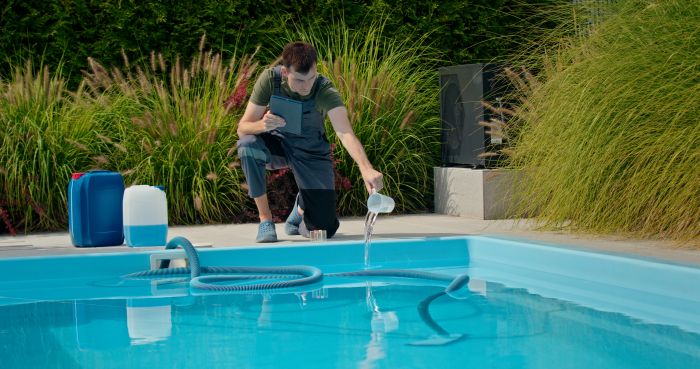
After cleaning your pool for the summer, don’t forget to prepare it for winter at the end of the season. Taking the right precautions will minimize the amount of cleaning required at the start of next season.
A pool cover is an important part of winterizing your pool, as it protects the water from dirt and debris and reduces heat loss. There are different types of pool covers, such as winter covers, safety covers, and solar covers. Winter covers offer optimal protection against snow, ice, and leaves and are made of durable material. Safety covers are ideal for households with children or pets, as they are sturdy enough to support the weight of several people.
Solar covers use solar energy to heat the water in an environmentally friendly way. Winter maintenance of your pool is essential to prevent algae growth and other problems. This includes regularly checking the pH and chlorine levels, using a winter maintenance kit, removing leaves and debris from the pool cover, and checking the pool equipment.
You should also drain the skimmer and pump and store them in a dry place, and use a pool heater if necessary to keep the water warm and prevent frost damage. These measures will keep your pool protected and in good condition during the winter months.
Conclusion
Maintaining your pool is crucial to ensuring a safe and enjoyable swimming area for your family. Regular cleaning and maintenance will help you maintain water quality and extend the life of your pool. Whether you have an above-ground or in-ground pool, the right tools and chemicals, as well as daily, weekly, and seasonal maintenance routines, are essential.
With the tips and tricks provided in this blog, you can ensure that your pool always remains in top condition. However, if you still feel overwhelmed, hiring professional pool cleaning and maintenance services may be a sensible solution. This way, you and your family can always enjoy a clean and safe swimming experience.
Frequently asked questions
What is the best way to clean a pool?
The best way to clean a pool is through regular maintenance. You should clean your pool at least once a week by removing leaves, dirt, and other debris from the surface of the water. Use a pool cleaner to clean the bottom and walls of the pool. Be sure to keep an eye on the pH level of the water to ensure that it remains within the optimal range.
How do you clean the bottom of the pool?
To keep the bottom of the pool clean, it is best to clean it regularly. Use a pool cleaner or pool vacuum to remove debris and dirt from the bottom. You can also use a pool brush to remove stubborn dirt. Make sure you keep an eye on the pH level of the water to ensure it remains within the optimal range.
How do I get the dirt out of the pool?
To remove dirt from the pool, you should clean it regularly and make sure that the pH value of the water remains within the optimal range. Use a pool cleaner or pool vacuum to remove