

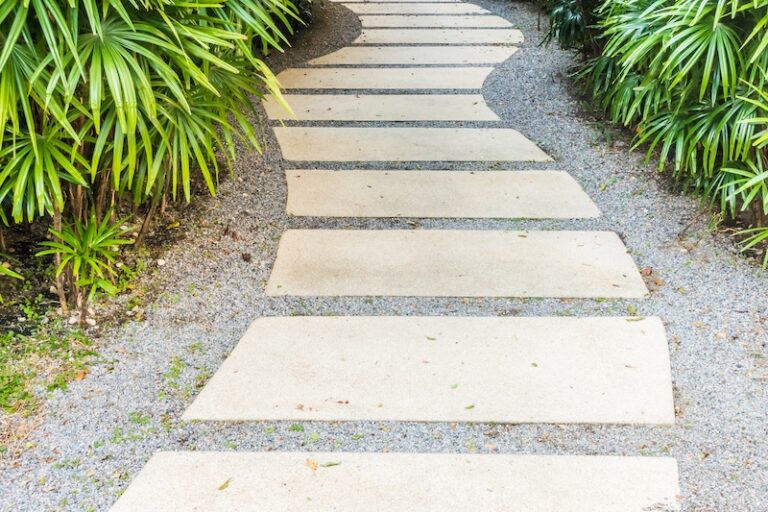

Imagine it’s the first warm day and you step barefoot onto the terrace, look forward to a relaxing evening outdoors, and immediately notice that the tiles feel slippery. Green deposits bloom between the joints, and algae and moss have spread. A typical picture after a long winter or wet spring and a clear case for a thorough cleaning.
Because patio tiles don’t just get dirty on the surface. Over time, dirt particles, leaves, pollen, and moisture form a layer that not only looks unsightly but can also pose a real risk of slipping. If you react too late, you not only risk discoloration, but also permanent damage to the material and joints of your tiles.
In this article, you will learn how to clean your patio tiles, which cleaning solutions really help, and what you should pay particular attention to with natural stone, porcelain stoneware, or concrete slabs.
We will also show you how to avoid mistakes that often cause more harm than good. You’ll learn the clear step-by-step instructions, practical tips, and sustainable solutions. Your terrace will soon look as inviting as it did on the first day.
When Should You Clean the Patio Tiles, and Why is Regular Cleaning so Important?
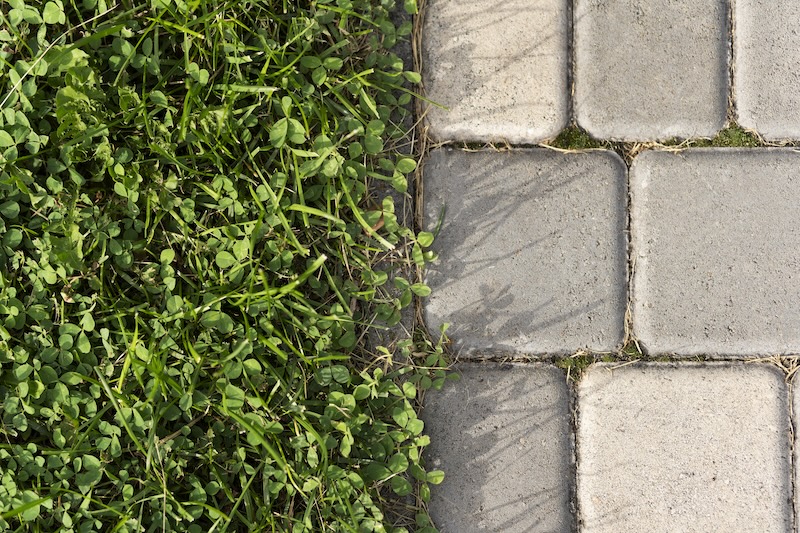
Terrace tiles are exposed to the elements every day. Rain, sun, leaves, pollen, and dirt settle in the joints and on the surfaces for weeks and months.
Here’s what initially seems harmless but can become a real problem over time:
- Damp coverings, algae, and moss not only create an unclean impression but can also become a dangerous slip trap, especially with smooth or sealed tiles. Anyone who reacts early protects themselves and their family.
The substance of your patio also benefits from regular maintenance:
- Dirt permanently attacks the material, discolors sensitive surfaces, or makes joints porous.
- This is particularly true for natural stone tiles, which react much more sensitively to weathering than porcelain stoneware or concrete slabs.
- If you clean regularly, you extend the lifespan of the entire terrace – and also maintain the value of the property.
But when is the right time for a thorough cleaning? Let’s take a closer look:
- Spring is a great way to remove winter residue and make the terrace fit for the season. For example, you could clean your terrace during a basic spring cleaning.
- Even after long periods of rain or in autumn when a lot of leaves fall, it is worth checking.
- Visible clues such as green films, dark spots, or shiny spots on the floor clearly show that it is time for cleaning.
- Also, pay attention to the weather conditions: a dry, mild day without direct sun is ideal. This means that cleaning products can work evenly, and the tiles dry off without streaks.
By the way: If you are unsure which cleaning products suit your floor covering or how heavily soiled surfaces will be cleaned again, it is worth advising a cleaner.
Specialists know exactly how to properly clean your terrace and garden without damaging the material, particularly helpful for sensitive or large outdoor areas.
Step-by-step instructions: Clean patio tiles
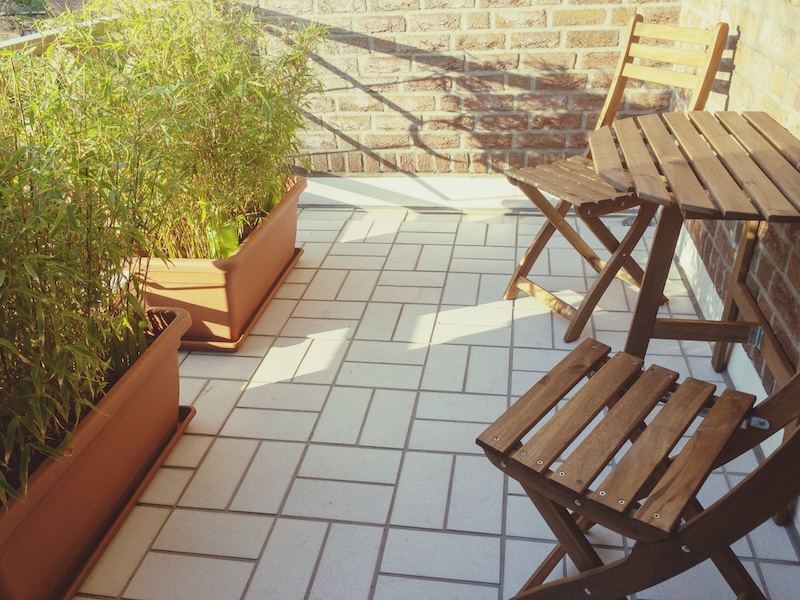
As soon as you know when and why cleaning makes sense, you can start implementing it. The good news: You don’t need expensive machines or aggressive chemicals.
With a little preparation and the right method, depending on the type of tile, even stubborn dirt can be removed sustainably. Here you will find proven step-by-step instructions that work in practice and ensure well-maintained areas in the long term.
1. Preparation
Before you actually start cleaning, create a free area. Put furniture aside, remove leaves, twigs, or leftover flowers. This prevents new dirt from spreading again straight away. Also, check the material of your tiles. Natural stone requires other means than porcelain stoneware or concrete slabs.
Provide the following things:
- A bucket of warm, clean water
- A sturdy scrub brush or stick scrubber
- Garden gloves
- A garden hose or high-pressure cleaner (depending on the surface)
- Optional: home remedies or a special cleaner, tailored to the topping
2. Preliminary cleaning
Sweep or vacuum the surface thoroughly. This removes loose particles such as sand, leaves, or dust. On warm days, it is advisable to pour clean water on the tiles slightly to prevent cleaning agents from drying out quickly. This means the products appear more even, and you save yourself unnecessary rework.
3. Deep cleaning
Now it’s time to get to the substance. Choose a cleaning technique by material:
- Porcelain stoneware: durable, can also tolerate special cleaners
- Natural stone: sensitive to acidic products, therefore works better with a pH-neutral stone cleaner or home remedies
- Concrete slabs: robust, can also be cleaned with warm water, a little soap, or soda
Apply the cleaning product evenly. Leave it on for 10 to 15 minutes, depending on the product. Then scrub the surface systematically with a brush.
For large terraces, a patio cleaner attachment for the high-pressure cleaner can also be useful. Here, you should check in advance whether the covering can withstand the pressure.
4. Follow-up treatment and care
After cleaning your patio, you should rinse all residue thoroughly with clean water. It’s best done with the garden hose or bucket and scrubber, and let the surface dry completely.
Then check the joints. Are they still stable, or are there cracks? You can repair minor damage directly with joint compound.
If you want long-term care, you can impregnate or seal the tiles depending on the material. This protects against new dirt, makes the next cleaning easier, and gives the area a fresh, well-groomed look.
Tile Cleaning: Home Remedies
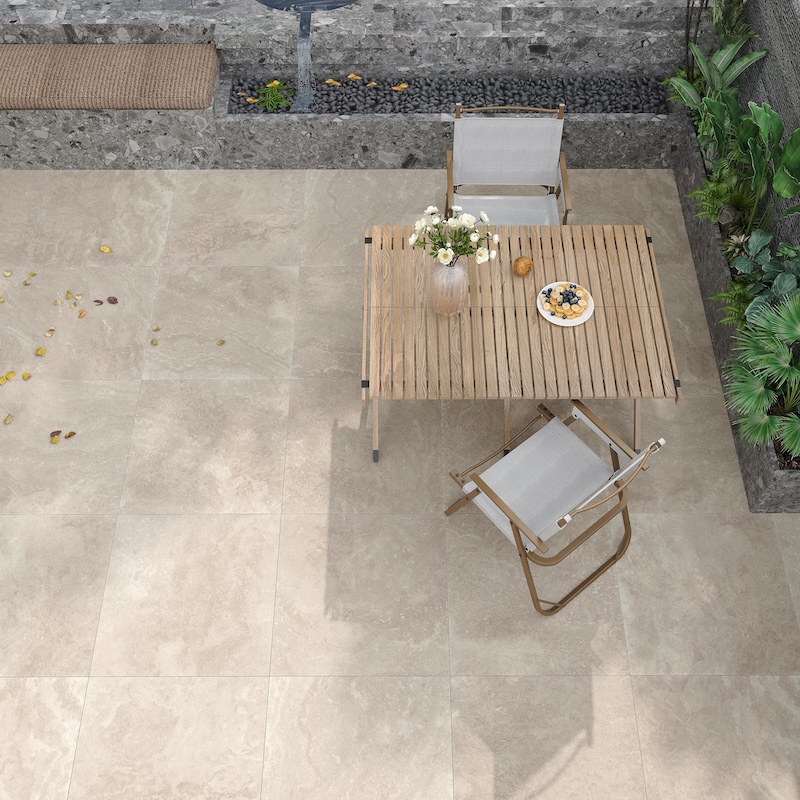
You don’t always need aggressive cleaning agents to bring the terrace and joints back to a high shine. In many cases, simple home remedies that you probably have at home anyway are sufficient. They are not only cost-effective, but also environmentally friendly and material-friendly. However, it is important to know how to use them correctly.
Baking soda or washing soda against grease and green deposits
Baking soda is a real all-rounder in the household. It also has a reliable effect on the terrace. Whether it’s residues of grilled fat, pollen, or bird droppings, baking soda can help:
- Simply apply a paste made from baking soda and water, leave it to work briefly, and rework it with a hard brush.
- Alternatively, for large areas of contamination, washing soda can be dissolved with warm water and distributed evenly. Particularly effective for stubborn surfaces.
Vinegar water for acid-resistant tiles
Vinegar cleans reliably and at the same time works against algae and moss:
- Mix vinegar and water in a 1:4 ratio and apply the solution to the affected areas.
- Attention: Natural stone tiles such as marble or travertine do not tolerate acid. Always check whether your tiles are acid-resistant before use.
Soft soap or curd soap for gentle care
If you are looking for a plant-friendly and regular cleaning method, soft soap is ideal:
- Dissolved in warm water, it cleans thoroughly without harming the environment or adjacent beds.
- Particularly suitable for sealed surfaces and wood-look tiles. Classic curd soap is also a proven alternative for weekly care.
Other proven home remedies
- Citric acid: Removes lime edges, has a disinfectant effect, but can also only be used on acid-resistant surfaces.
- Baking soda: Helps against dark spots and organic residues. Simply mix with water to form a paste, apply, brush, and rinse.
- Hot water with a little salt: Can serve as a natural moss remover if you don’t have any plants in the immediate vicinity.
Always use home remedies specifically, depending on the material of your tiles. If in doubt, it is worth carrying out a short material test in an inconspicuous place – or consulting a professional.
Many cleaners who specialize in outdoor areas have the necessary know-how to clean patio tiles efficiently and gently. This is particularly helpful for heavily weathered or sensitive surfaces.
Cleaning Patio Tiles by Type: What You Need to Consider
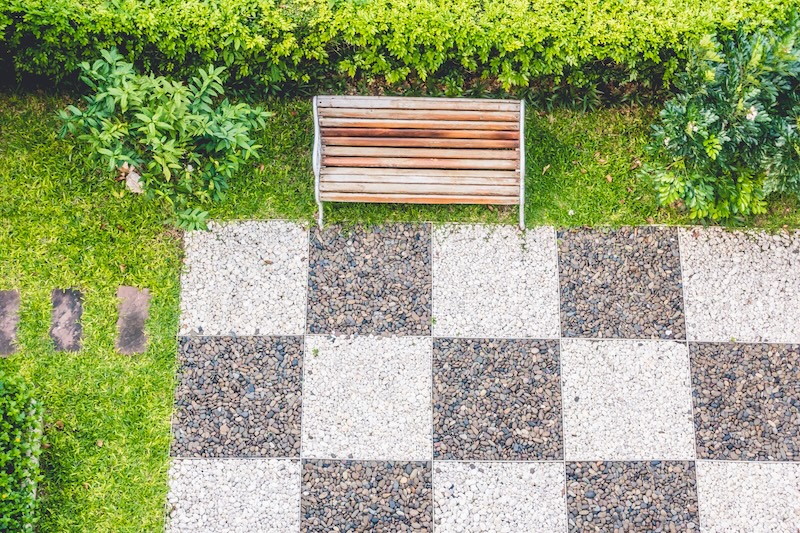
To ensure that your terrace not only looks clean but also stays beautiful for a long time, it is worth taking a closer look at the material of your tiles.
Depending on their nature, concrete, natural stone, or porcelain stoneware have their own cleaning requirements. Anyone who blindly resorts to a universal cleaner risks matt surfaces, efflorescence, or permanent discoloration.
Natural stone tiles
- Natural stones are porous and sensitive to acidic agents such as vinegar or citric acid.
- These can attack or bleach the surface.
- Instead, use pH-neutral cleaners or special natural stone remedies.
- After cleaning, impregnation is recommended to protect the material from moisture, algae, and other discoloration.
Porcelain stoneware and ceramic tiles
- These outdoor tiles are much more robust and easier to maintain. However, you should not resort to aggressive cleaners.
- A mixture of soft soap and warm water is sufficient for regular care.
- If it is very dirty, you can help selectively with baking soda or a special outdoor tile cleaner.
- Important: Even with outdoor tiles, you should avoid sharp wire brushes so as not to roughen the surface unnecessarily.
Concrete Slabs
- Concrete absorbs dirt and moisture quickly. Therefore, make sure that the surface does not remain wet for too long.
- Coarse algae or moss residue can be removed with hot water and a scrubber.
- If necessary, special algae removers will help. Check that your concrete slabs are coated before use, as this will influence the choice of detergent.
Anti-slip outdoor tiles and textured surfaces
- They ensure more safety, but are significantly more complex to clean.
- Dirt, dust, and algae collect particularly stubbornly in fine grooves and depressions.
- Deep cleaning with a brush, water, and a grease-dissolving cleaner is recommended here.
- Pressure washers should be used carefully as they can roughen the surface or damage joints if used incorrectly.
Care and Maintenance: This Means Your Patio Tiles Stay Beautiful Longer
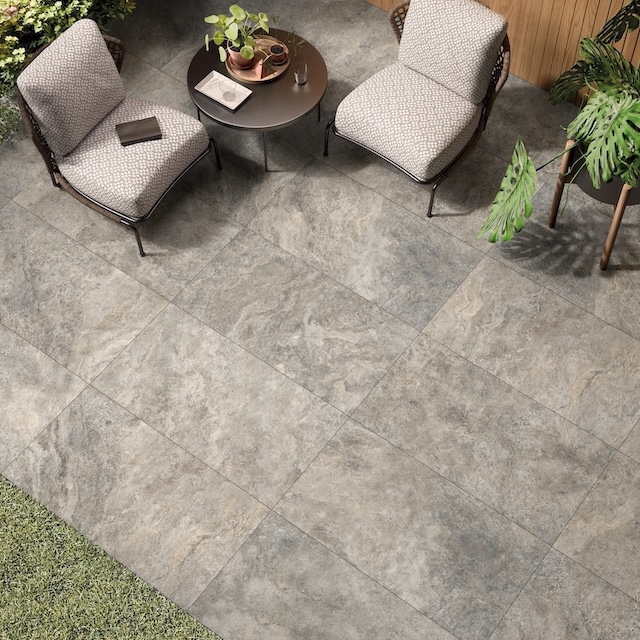
Once the outdoor tiles have been thoroughly cleaned, the real supreme discipline begins: regular care. If you stick with it, you will not only prevent new dirt but also significantly extend the lifespan of the covering and joints. What matters is not complex measures, but rather continuity.
With these simple routines, your patio will stay in top shape for the long term:
- Weekly basic care:
- Sweep loose leaves, dust, and dirt regularly, and in dry weather, a quick splash with the garden hose will also help to avoid deposits.
- Protection against winter damage:
- Roof or cover your terrace in the cold season, especially if you have sensitive natural stone. Alternatively, it is worth waterproofing that repels moisture and reduces dirt penetration.
- Spring checklist for a clean start:
- Check joints for cracks or moss formation
- Remove slippery surfaces
- Move patio furniture and clean the surfaces underneath
- Treat any damage or efflorescence early
Every two to three years, check the seal. Sealing further protects porous types of outdoor tiles from stains and environmental influences. Get advice on which product suits your topping and how to apply it professionally.
Cleaning Patio Tiles: In Summary
Anyone who cleans their patio tiles regularly invests not only in appearance, but also in safety, longevity, and value retention. Algae, dirt, and moisture may seem harmless, but they not only attack the material but also increase the risk of accidents – especially on smooth or sealed surfaces.
And the good news is that you don’t need expensive specialty products to clean thoroughly. Many home remedies, such as baking soda, soft soap, or citric acid, work surprisingly effectively – provided you know which remedy is suitable for which type of outdoor tile.
Anyone who cleans acid-sensitive natural stone must proceed differently from robust porcelain stoneware or structured concrete slabs.
Timing also plays a crucial role. Spring is ideal for basic cleaning, while regular care routines in everyday life ensure a well-kept terrace in the long term. Small measures such as sweeping, rinsing, or occasional impregnation have a big impact – especially if they are implemented consistently.
And if you’re unsure how to clean your outdoor tiles, it’s worth looking outside, just book a cleaner with Helpling!
In the end, one thing counts most: a well-kept terrace invites you to linger. It is safe, clean, and will remain a real highlight of your outdoor area for years to come. Make care a routine – Your patio will thank you. And you too.