



Anyone who barbecues regularly knows the problem. After the last steak, more than just the delicious smell remains. Burnt-on grease residues, charred marinade, and sooty deposits stick everywhere. They look unsightly, smell unpleasant, and can even be harmful to your health. Nevertheless, thorough cleaning of the gas grill is often neglected or done half-heartedly.
The fact is, a clean grill is not only more hygienic, it also grills better. The heat is distributed more evenly. The flame remains stable. And the food tastes as it should – fresh, smoky, and aromatic.
Many cleaning mistakes arise from ignorance, others from routine. That’s exactly why it’s worth taking a look at the practices of real barbecue pros. Because if you know what matters, you’ll save time and extend the life of your grill at the same time.
In this article, you’ll learn how to clean your gas grill and how to remove stubborn stains with household remedies. We have five well-thought-out tips for you that you won’t find in most traditional guides. We’ll also show you which mistakes you should avoid at all costs and why cleaning immediately after grilling is often most effective.
Let’s get started. Your grill will thank you. And so will your next BBQ.
Why and when should you clean a gas grill?
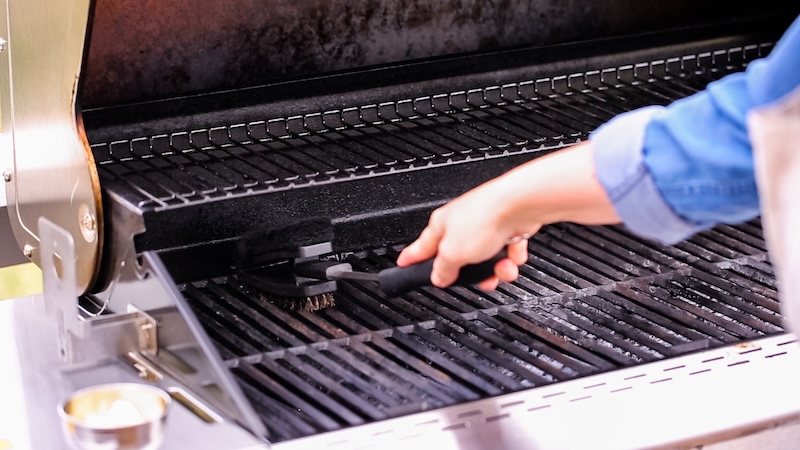
A clean grill not only produces better steaks, but it is also a real safety factor. Cleaning your grill regularly protects you, your food, and the lifespan of the appliance. This is because grilling produces much more than just a pleasant smell. Residues accumulate in every crack and crevice, often unnoticed. On the other hand, consistent cleaning not only ensures hygiene and safety but also a clean and shiny grill, which makes the next BBQ twice as enjoyable.
Three reasons why cleaning is essential:
Hygiene: Grease, marinade, and meat juices remain after grilling. Combined with a warm environment and humidity, this creates an ideal breeding ground for bacteria. If the grill is not cleaned, it can affect your health.
Safety: Crusted-on grease deposits ignite more quickly than many people think. Even a small spark is enough to start a grease fire. And that can quickly become dangerous, especially with closed grill systems.
Taste: A good barbecue flavor comes from freshly cooked ingredients, not from the residue left over from the last barbecue. Old crusts burn again and affect the flavor. The result? A piece of meat with an unpleasant taste that should not end up on your plate.
Cleaning a gas grill: When is the right time?
After every barbecue, remove coarse residues, clean the grate, and empty the grease tray. This only takes a few minutes, but prevents dirt from sticking.
Once a month (depending on use): Plan a thorough deep clean. Don’t forget the burners, interior walls, and accessories. If you barbecue frequently or like to marinate, you should do this every two to three weeks.
And if you don’t have the time or feel unsure, you can also conveniently outsource the cleaning. As part of a professional household cleaning service, for example, via platforms such as Helpling, the cleaning of the gas grill can also be easily covered, which is particularly practical before the next big barbecue. By the way: you can also have other tasks such as cleaning the ceramic hob or baking tray done at the same time.
In short: if you clean regularly (or delegate cleverly), you’ll save yourself a lot of effort later on. Below, we’ll show you five practical tips for cleaning your gas grill thoroughly, safely, and sustainably.
5 expert tips: How to clean your gas grill
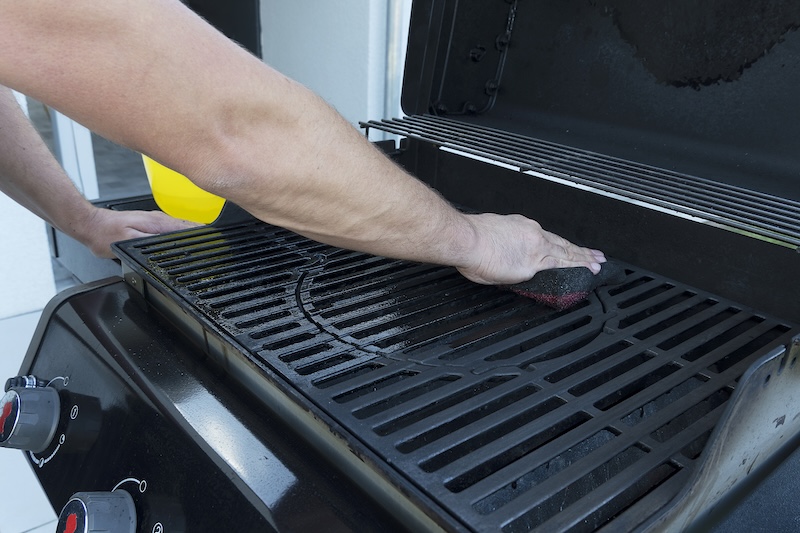
Cleaning a gas grill is not just cleaning a gas grill. Those who have only focused on the grill rack often overlook the actual sources of dirt and waste potential. Because when properly maintained, your gas grill not only works better, but also stays operational longer. The following five tips come straight from practical experience and show you how to get the most out of your grill with little effort.
Tip 1: Make clever use of residual heat
Immediately after grilling is the perfect time for the first cleaning. Why? The residual heat in the closed grill lid acts as a natural self-cleaner:
Set the burners to maximum power for a few minutes. This will burn off any grease and marinade residue completely or make it much easier to remove from the grate.
Then use a stainless steel brush or simply some crumpled aluminum foil to remove the burnt residue in a few strokes.
The advantage: you save yourself the hassle of scrubbing the next day. In addition, you extend the life of your grill grate because grease cannot burn in permanently. For cast iron grates, it is recommended to apply a little vegetable oil afterwards. This prevents rust and maintains the non-stick effect. A small effort with a big impact.
Tip 2: Don’t forget the burner covers and flame plates
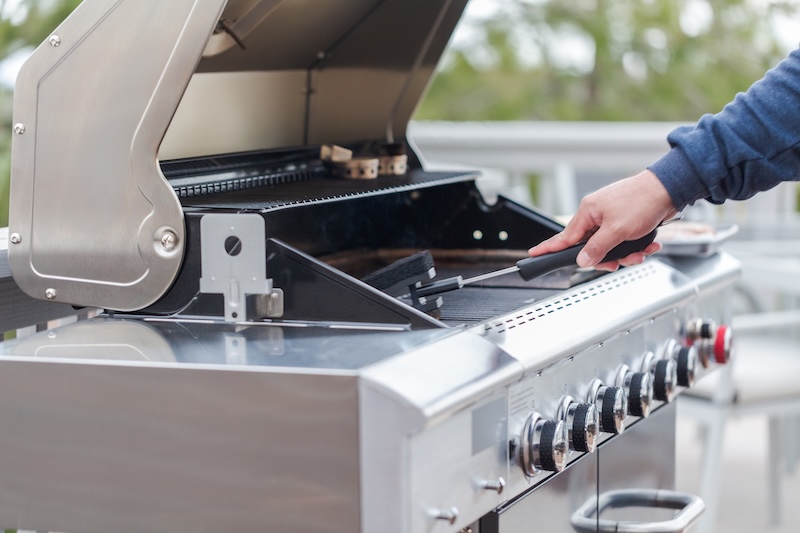
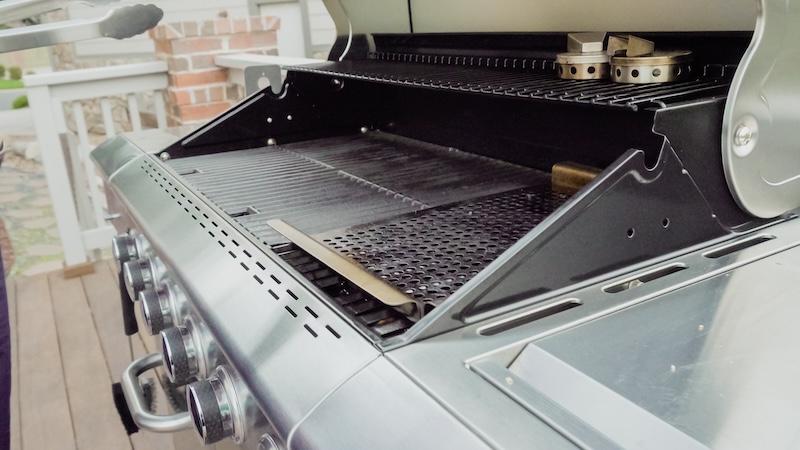
Many amateur barbecue enthusiasts clean the grill and perhaps the drip tray. But underneath lies an area that deserves at least as much attention: the burner covers and flame tamers. These parts catch drops of oil and marinade directly above the gas flame, making them particularly susceptible to encrustation.
Remove the flame plates regularly and soak them in hot water with a little dish soap.
After 15 minutes, residues can be easily removed with a wooden spatula or plastic scraper.
If you like to be thorough, you can also use baking soda and water.
The burner openings themselves should be cleaned carefully with an old toothbrush or compressed air. Clogged nozzles lead to uneven heat distribution, which is later visible on the food being grilled.
Tip 3: Home remedies instead of chemicals

Many people automatically reach for expensive special cleaners. However, most residues can be easily removed with natural remedies. A particularly effective combination is baking soda and lemon juice.
Put a tablespoon of baking soda and a teaspoon of lemon juice in a spray bottle with warm water, shake the mixture well, and spray it onto the cold grill surfaces.
After about 15 minutes, even stubborn grease deposits will dissolve. Take a cloth or grill brush and wipe thoroughly.
This method is not only environmentally friendly, but also gentle on stainless steel, enamel, or cast iron surfaces. For particularly stubborn stains, a paste made from baking soda and vinegar also works great. Simply apply, let it sit, and then wipe off. Odorless, antibacterial, and effective without any harsh chemicals.
Tip 4: The steam method
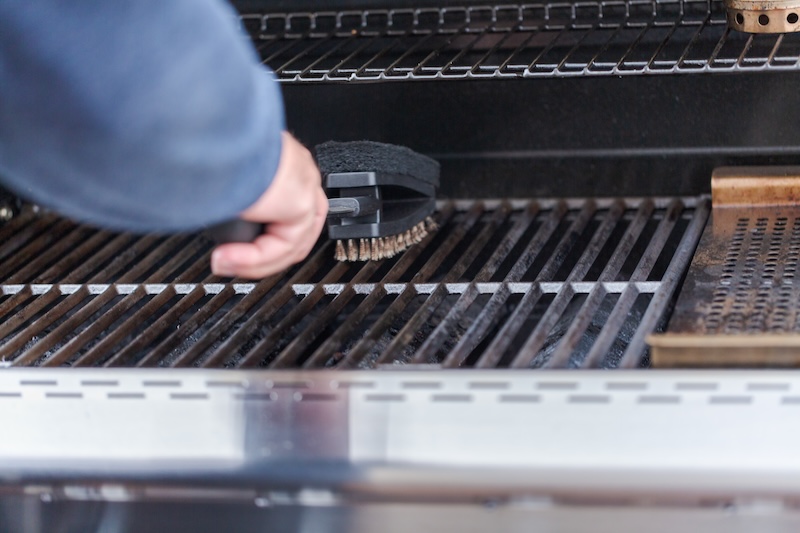
This trick actually comes from professional kitchens, but it also works on your balcony at home:
- Immediately after grilling, while the grill is still hot, place a fireproof bowl filled with water and a few splashes of lemon juice on the grill.
- Close the lid and leave the grill for 10 to 15 minutes.
- The steam that is produced acts as a natural solvent for grease and dirt.
- Even stubborn residues can then be wiped off much more easily.
- The lemon scent neutralizes unpleasant odors and gives the grill a new shine.
This method works wonders, especially on enameled and cast iron surfaces. Another advantage: you save yourself the trouble of soaking or laboriously dismantling components.
Tip 5: Clean systematically
If you barbecue regularly, you should also maintain your grill regularly. But not every cleaning session has to turn into a complete overhaul. With a simple maintenance plan, cleaning your gas grill becomes routine, and your grill stays in top condition without much effort.
- After each use: Brush off the grill grate, empty the grease tray.
- Weekly (if used frequently): Use household remedies, oil the grate.
- Once a month: Thoroughly clean the flame plates, burner covers, and interior.
- At the beginning or end of the season: Complete cleaning, including checking the ignition, gas hoses, and seals.
Tip: Hang a small checklist in the base cabinet of the grill or set a reminder in your calendar. That way, you won’t miss any important maintenance steps. If you don’t want to do the work yourself, you can also hire an experienced domestic helper. Platforms such as Helpling provide cleaning staff who can help with grill maintenance, especially handy before or after the grilling season.
Conclusion
A well-maintained gas grill is more than just a visual thing. It guarantees safe grilling, intense flavor, and a long service life for your appliance. Cleaning it regularly not only prevents grease fires and unpleasant odors but also ensures more even grilling and significantly better results.
The five tips presented here show that it doesn’t take much to clean effectively and sustainably. Household remedies, such as baking soda or lemon, are often sufficient. Clever routines, such as using residual heat or the steam method, also save time and protect the material. One thing is particularly important: stick with it.
Whether you do it yourself or hire a cleaner through a platform such as Helpling, a clean grill is always a worthwhile investment. For your health. For the taste. And for relaxed barbecue evenings without any nasty surprises.
Because at the end of the day, if you love your grill, you take care of it. And that pays off with every perfectly grilled steak.
Cleaning a gas grill – Frequently asked questions (FAQs)
What is the best way to clean my gas grill?
The most effective method is to combine burning it out immediately after grilling with regular deep cleaning. After barbecuing, run the grill at the highest setting to burn off grease and residue. Then clean with a grill brush or aluminum foil. Household remedies such as baking soda, lemon juice, or vinegar are suitable for thorough cleaning. These can also be used to gently clean interior surfaces, burner covers, and flame plates.
How often should you clean a gas grill?
A rough cleaning, i.e., brushing off rust and emptying the grease tray, is advisable after each use. A thorough deep cleaning is recommended every four to six weeks. If you grill frequently or prepare heavily marinated foods, you should clean your grill more thoroughly every two to three weeks.
When is the best time to clean?
Immediately after grilling, while the grill is still warm. The residual heat makes it much easier to remove residues. However, the grill should be completely cooled down for deep cleaning, especially if you want to use household remedies such as baking soda or vinegar.
What can you use to clean a gas grill?
In addition to classic grill cleaners available in stores, environmentally friendly household remedies are also suitable. Recommended are:
- Baking soda or baking powder: ideal for grease and burnt-on residues
- Lemon juice has an antibacterial effect and removes odors
- Vinegar: helps against limescale and disinfects
- Shaving cream (for stubborn stains)
Avoid aggressive chemicals that can attack the material or damage the surface.
How do you clean a cast-iron grill grate?
Cast iron grates require a lot of care, but they are durable. Here’s how to clean them properly:
- After grilling, brush off any coarse residue with a stainless steel brush.
- Never soak in water.
- If necessary, clean with a soft brush and a little baking soda.
- Then wipe dry and lightly oil (e.g., with vegetable oil) to prevent rust.
Tip: Do not use a dishwasher or harsh cleaners, as these destroy the natural protective layer of the cast iron.
Can you clean a gas grill with a pressure washer?
This is strongly discouraged. The strong water jet can damage sensitive parts such as igniters, gas connections, or thermometers. In addition, water often gets into places where it can cause rust or malfunctions. It is better to use damp cloths, brushes, and household remedies.
How can you tell if the grill is really clean?
A clean grill smells neutral, has no grease crusts, and has a clear, rust-free grate. Also, pay attention to the burner openings. If the flame is uneven or hisses, this could be a sign of clogged nozzles. In this case, additional cleaning with compressed air or a toothbrush is advisable.