
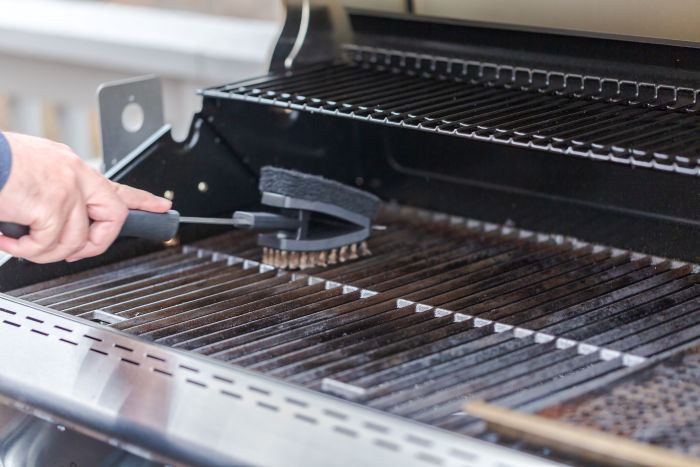

The best way to clean grill grates is to heat the grill, scrub the hot grate with a brass or stainless-steel brush to loosen burnt-on residue, then wipe it down with a vinegar-and-water or baking-soda solution to cut through grease, and finally rinse and dry thoroughly before oiling the grate to prevent rust. For heavily caked-on grime, soaking the grate in warm soapy water or a vinegar solution for 30 minutes before scrubbing makes the job much easier. Doing this regularly keeps food tasting better and reduces health and fire risks from built-up grease.
A quick brush before and after each barbecue helps, but a thorough deep clean on a regular basis is key since dried-on grease and food residue can affect taste, pose health risks, and increase fire hazards. Grill grates shouldn’t go in the dishwasher — but there are household remedies that work just as well to get them spotless for the next BBQ season.
How often should you clean the grill grate?
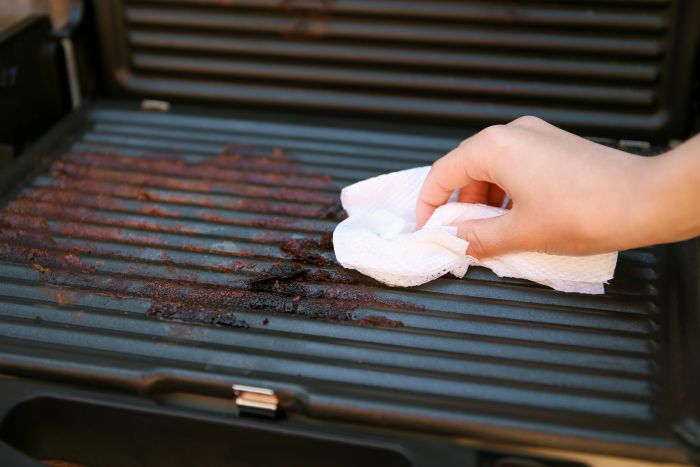
How often a grill grate should be cleaned depends largely on how often and what you grill with it. It’s not just about appearance, but also hygiene, taste, and the lifespan of the grate. Here are some guidelines on how often you should clean your grill grate:
Rough cleaning – after every use:
- Remove coarse residues, burnt-on marinades, and grease after each use.
- It’s best to do this right after grilling, when the grate is still warm. This makes it easier to remove the residue.
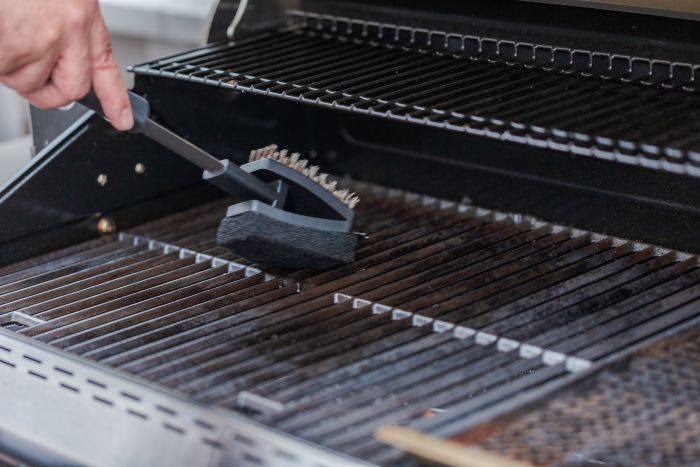
- A grill brush or some crumpled aluminum foil can help you do this quickly.
Basic cleaning – depending on how often you use it:
- If you grill regularly, you should plan to do a more thorough cleaning about once a month.
- This includes soaking the grate, removing stubborn encrustations, and maintaining the coating.
- Don’t forget the underside of the grate and the burner covers.
Seasonal check:
- Before the first barbecue in spring and after the last barbecue in autumn, it is worth cleaning the grill thoroughly.
- This protects against rust formation over the winter and ensures a fresh start to the new barbecue season.
Material makes the difference:
- Stainless steel grates are relatively easy to care for and rust-free, but cannot tolerate aggressive steel brushes.
- Cast iron grates need to be oiled regularly to prevent rusting.
- Enamelled grates are sensitive to scratches and should only be cleaned with soft brushes or cloths.
Expert help for stubborn cases:
- If time is short or the grate is particularly dirty, it may be a good idea to delegate the cleaning to an experienced domestic helper.
- Professionals know exactly how to remove even stubborn burnt-on residues. This will keep your grill in top condition.
Cleaning the grill grate with household remedies
When cleaning your grill rack, you don’t always have to resort to chemical cleaners. Often, a glance in your kitchen cupboards is enough to find effective and environmentally friendly alternatives. These household remedies are not only inexpensive, but also easy to use:
Baking soda and baking powder: the classics for grease and burnt-on food:
- Baking soda and baking powder are excellent for cleaning. Both agents have a strong grease-dissolving effect and are particularly suitable for encrusted grates.
- Mix baking soda or baking powder with a little warm water to form a thick paste.
- Apply the paste to the cooled grate and leave it to work for at least 15 minutes.
- Then scrub with a grill brush and rinse thoroughly with clean water.
- Ideal for stainless steel grates, but also suitable for cast iron varieties.
Vinegar and citric acid: natural, but use with caution:
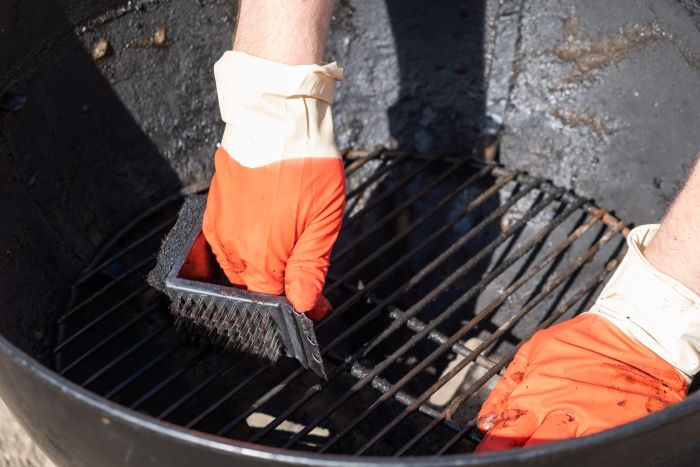
- Particularly effective against burnt-on residues and stubborn grease deposits.
- Mix equal parts vinegar and water or use citric acid solution.
- Apply with a sponge or cloth and leave to work for a few minutes.
- Then brush off and rinse well.
Caution: Not suitable for enameled grates, as the acid can attack the coating.
Coffee grounds: the underrated all-rounder:
- Works like a natural scouring agent and neutralizes odors.
- Put damp coffee grounds on a cloth or sponge and rub the grate with it.
- Then rinse thoroughly and dry.
- This is particularly useful if the grate is slightly burnt but you don’t want to damage the coating.
Aluminum foil and newspaper: quick helpers for in between:
- Crumpled aluminum foil is ideal for scraping off coarse residues immediately after grilling.
- Wrap the still-warm grill completely in damp newspaper and let it soak for a few hours. This makes even stubborn residues easier to remove.
- This method works particularly well on stainless steel and cast iron grills.
Steam and hot water: simple, but often underestimated:
- Place a heat-resistant bowl of water directly on the still-warm grill and close the lid.
- The resulting steam loosens grease and burnt-on residue, making it easier to brush off later.
- A simple but effective method that also disinfects the grill.
Our Tip: If you don’t have the time or the grill grate is particularly dirty, you can also leave the cleaning to a domestic helper. Cleaners not only know the best tricks for grill grates, but also know how to make ceramic hobs or baking trays shine again.
Cleaning grill grates: 5 professional tips for perfect results
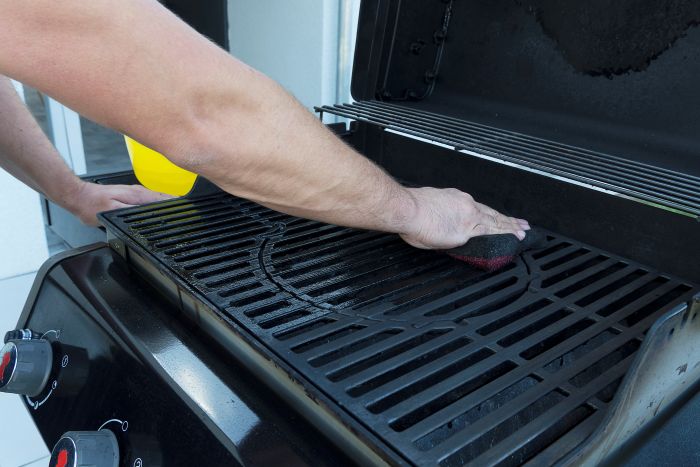
Now that we’ve gone through the basics, it’s time to take grill cleaning to the next level. Here are five pro tips to keep your grill grate not only clean, but also in top shape for the long term:
Tip 1: Burn off the grate
Immediately after grilling, the heat in the grill is at its highest. This is the perfect moment to clean the grate gently and effectively.
Set all burners or the charcoal to maximum heat and close the lid. Let the grate burn out for about 10 to 15 minutes. This intense heat burns most grease and food residue into fine ash powder, which can be easily brushed off later.
Then use a sturdy grill brush or a crumpled piece of aluminum foil to remove the remaining residue. This method protects the surface and reduces the accumulation of stubborn encrustations.
Tip 2: The onion trick
A halved onion is a surprisingly effective grill cleaner. The sulfur compounds it contains dissolve grease and bind odors – ideal for use immediately after grilling.
Skewer the onion half on barbecue tongs or a long fork. Rub the still-warm grate with it. The acids and essential oils dissolve the residue, while the structure of the onion acts as a gentle abrasive.
This method is particularly suitable for cast iron grates, as it protects the patina and has an antibacterial effect.
Tip 3: Be careful with cast iron
Cast iron grill grates require slightly different care than stainless steel. The focus here is not on aggressive cleaning, but on preserving the natural protective layer.
Avoid using dish soap or aggressive cleaners, as these can destroy the protective layer of grease.
Instead, brush off coarse residues after use and occasionally rub the grate with a little vegetable oil. This process, also known as “seasoning,” protects the material from rust and ensures that food does not stick to the grill.
If stubborn residues have become stuck, it often helps to burn the grate briefly and then scrape it off with a wooden scraper.
Tip 4: Use stainless steel brushes correctly
Stainless steel grates are more robust than their cast iron counterparts, but care should still be taken when cleaning them. Wire brushes are effective, but only if the bristles are not too hard.
It is best to use stainless steel or brass brushes that have been specially designed for grill grates. Make sure that no bristles come loose, as these could later stick to the food being grilled.
A gentler alternative is bamboo or silicone brushes, which also clean thoroughly without scratching the surface.
Tip 5: Regular maintenance for long-lasting grills
If you maintain your grill grate regularly, you will enjoy grilling for longer. In addition to cleaning, occasional impregnation is also worthwhile to prevent rust and discoloration.
After cleaning, apply a thin layer of heat-resistant vegetable oil or special grill grease. This protects the surface from moisture and prevents food from sticking during the next use.
Our Tip: Even a simple trick like rubbing it with raw potato juice can help improve the non-stick effect—an old barbecue master trick that is often underestimated.
Conclusion

A clean grill grate is not just a matter of appearance, but also of hygiene and safety. Regular cleaning extends the life of your grill, improves the taste of your food, and reduces the risk of grease fires. Whether you rely on household remedies such as baking soda, vinegar, or coffee grounds, or take the tips of the professionals to heart, the important thing is to keep at it. Because a well-maintained grate ensures even heat, less smoke, and better overall grilling results.
And if you want to make the job easier or simply don’t have the time for a thorough cleaning, Helpling cleaners can also take care of this task for you. They know the best tricks for stubborn stains – not only on grill grates, but also on ceramic hobs and baking trays. This way, your grill will not only be ready for use but also in top condition for the next grilling season.
Cleaning grill grates: Frequently asked questions (FAQs)
Can I also clean grill grates made of other materials, such as aluminum or copper?
Yes, grill grates made of aluminum or copper can also be cleaned, but particularly gentle methods should be used for these materials. Aluminum is more sensitive to scratches, and copper can become discolored if cleaned too aggressively. For both materials, it is recommended to use mild cleaning methods such as vinegar-water solutions or a soft sponge.
What should I do if stubborn encrustations form on the grate after grilling?
Stubborn encrustations are best removed by burning them off or soaking them. Turn the grill on at a high temperature to burn off the residue, or soak the grate in a solution of hot water and detergent. In extremely stubborn cases, the use of steam can also be helpful.
How can I prevent my grill grate from rusting after cleaning?
To prevent rusting, dry the grate thoroughly after cleaning and coat it with a thin layer of heat-resistant oil or special grill care product. This protects the grate from moisture and prevents corrosion.
Is it a good idea to soak grill grates in water?
Yes, soaking in water can help loosen baked-on residue and make cleaning easier. It is particularly effective if you also use vinegar, citric acid, or a mild cleaning agent. For heavy encrustations, a longer soaking time of several hours may be advisable.
Can I start grilling again immediately after cleaning?
After cleaning and maintaining the grate, always wait until it has cooled down completely and is dry before using it again. This prevents oil or cleaning solutions from transferring to the food and ensures a hygienic grilling experience.