



A fresh duvet is more than just a comfort factor. It contributes to restful sleep, reduces allergies, and prevents unpleasant odors. Over time, every duvet collects skin flakes, sweat, and dust mites, even if you regularly change the cover. That’s why it’s essential to clean not just your bedding but the duvet itself.
Many people overlook this crucial step. They wash sheets and covers regularly, while the duvet often goes untouched for years. The result? An ideal breeding ground for bacteria and dust mites. The good news is, you can easily change that. With the right care, your duvet can stay hygienically clean, airy, and pleasantly soft.
In this article, you will learn:
- How to wash, dry, and store your duvet to keep it fresh for a long time.
- The appropriate washing temperatures for different materials.
- How to effectively pre-treat stains and why proper drying is crucial to avoid mold.
- Practical tips on how to fluff and store your duvet after cleaning.
How Often Should You Wash Your Duvet?

A clean bedroom and proper bed hygiene are essential for good sleep. Regularly dusting, vacuuming, and changing your bedding not only keeps things tidy but also improves air quality and creates a healthier living environment. It’s especially important to care for the textiles you come into contact with every night. Therefore, make sure to clean your pillows, your mattress, and your duvet regularly. All three accumulate sweat, skin flakes, and dust over time. If not cleaned regularly, they provide an ideal habitat for dust mites and bacteria.
Many people wash their bedding weekly but forget about the duvet itself. Moisture and dirt can accumulate here too, leading to odors or allergic reactions in the long run. Regular cleaning ensures not just hygiene but also a fresh and pleasant sleeping experience.
As a guideline, consider the following washing frequency:
- Down Duvets: Wash about once or twice a year. Down feathers are delicate and should only be cleaned when necessary to maintain their natural structure.
- Synthetic Duvets: Wash every three to six months. These materials are more robust and can withstand more frequent washing without losing their shape.
- For Allergy Sufferers: Wash every two to three months to reduce dust mites and pollen residues.
Changing seasons is also a great time to refresh your duvet. When switching from a summer to a winter duvet (or vice versa), a thorough wash is worthwhile. This way, you can start the new season with a clean and fresh bedding environment.
A little tip to finish:
- Regular airing can significantly extend the time between washes.
- Simply hang your duvet outside, preferably on a dry day with a light breeze.
- This removes moisture, refreshes the fabric, and gives you a pleasantly clean feeling without needing a wash.
If you’re unsure how to properly wash or dry your duvet, an experienced housekeeper can provide valuable assistance. They know the right care methods for different materials and ensure your duvet gets clean without losing volume or quality.
Washing Your Duvet: Step-by-Step Guide

Before tossing your duvet into the washing machine, a little preparation goes a long way. Check the care label for the right washing temperature, whether drying is allowed, and which chemicals to avoid. Different materials like cotton, microfiber, down, or silk react differently to water and heat, so this check is crucial. If you spot any stains, gently treat them with gall soap or mild detergent to prevent them from setting in permanently. This sets the stage for your duvet to come out fresh, soft, and fluffy after washing.
1. Prepare the Washing Machine
Make sure there’s enough space in the drum. The duvet should be able to move freely. This allows the water to circulate evenly and keeps the filling loose. Large machines are ideal. For very large duvets, consider visiting a laundromat.
2. Choose the Right Washing Temperature
Typically, 40 degrees Celsius is sufficient. For allergy sufferers or heavily soiled items, 60 degrees may be advisable. Always refer to the care label, as different materials react differently to heat.
3. Use the Right Detergent
For down and delicate materials, liquid detergents work best. Wool, silk, or microfiber require specialized cleaning agents. This helps prevent matting, discoloration, or damage.
4. Set the Washing Cycle

A gentle wash cycle with a low spin speed is optimal. Many machines also offer an extra rinse cycle to thoroughly remove detergent residues, which is especially beneficial for delicate materials.
5. Treat the Duvet After Washing
Gently press out the duvet instead of wringing it. This avoids damaging the filling and keeps the duvet evenly filled. After that, you can start the drying process.
Important: Always consider the material; here’s a handy overview for you:
| Material | Washing Temperature | Detergent | Special Features |
| Down/Feathers | 30–40 °C | Special down detergent | Add tennis balls during drying to prevent clumping |
| Synthetic/Microfiber | up to 60 °C | Mild detergent | No fabric softener |
| Cotton | 60 °C | All-purpose detergent | Especially hygienic |
| Silk/Wool | Hand wash | Special wool detergent | Do not spin, only gently press out |
After Cleaning Your Duvet: Proper Drying and Storage
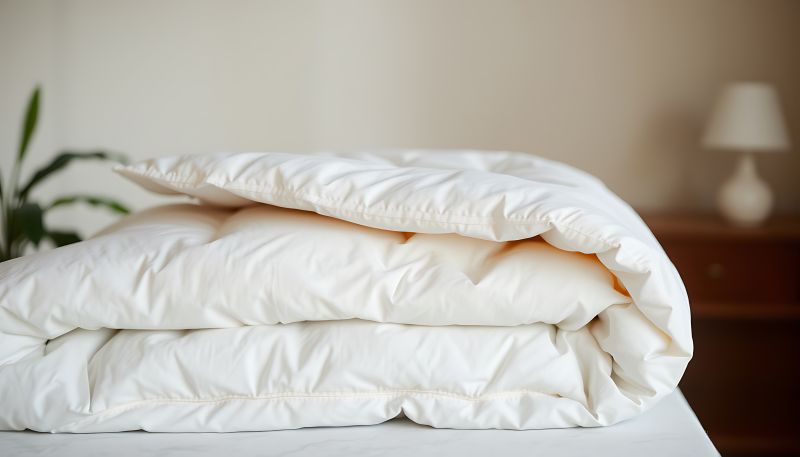
After washing your duvet, paying attention to proper drying and storage is almost as important. This ensures it remains fluffy, hygienic, and mold-free.
Drying the Duvet Properly
- Tumble Dryer: Use low temperatures to protect the material. For down or synthetic duvets, you can add tennis balls or special dryer balls. These help keep the filling loose and prevent clumping.
- Air Drying: Alternatively, lay the duvet flat. Turn it regularly to allow moisture to escape evenly.
- Important: Avoid direct sunlight and heat from radiators. Excessive heat can dry out or discolor the fibers.
- Tip: Ensure the duvet is completely dry. Moisture in the filling promotes mold growth and unpleasant odors.
Fluffing, Ironing, and Proper Storage of the Duvet
- Fluffing: Shake the duvet vigorously after drying to restore its original volume.
- Ironing: Generally, ironing is not necessary. If needed, you can iron on a low setting and place a cloth between the iron and the duvet.
- Storage: Store your duvet in a cool, dry place in breathable cotton covers. Avoid plastic bags or vacuum-sealed bags. This allows the material to breathe and stay fresh.
If you’re unsure how to wash, dry, and store your duvet, seeking advice from an experienced cleaner can be beneficial. If you have a housekeeper, they can not only help you clean your bedroom, but also provide helpful tips for your bed hygiene.
Conclusion
A clean duvet is crucial for restful sleep and a healthy indoor climate. Regular washing removes dust, skin flakes, sweat, and mites, preventing unpleasant odors and allergic reactions. It’s not just about using the right detergent and temperature; careful preparation, pre-treating stains, and selecting the appropriate wash program are essential.
After washing, proper drying determines the longevity of your duvet. Always ensure that the duvet is completely dry to prevent mold. Fluffing it afterward helps the filling retain its volume. Store the duvet in a cool, dry, and breathable environment to keep it fresh long-term.
If you’re unsure how to optimally care for your duvet, an experienced housekeeper or cleaner can provide valuable support. With these tips, you can enjoy not just a clean duvet but also a soft and fluffy sleeping experience night after night.
Washing Your Duvet: Frequently Asked Questions (FAQs)
Can I wash my duvet in a 7 kg washing machine?
It depends on the size and filling of your duvet. Small to medium duvets made of cotton or microfiber usually fit. For large duvets or those filled with down, it may be worth visiting a laundromat with larger machines. The duvet should be able to move freely in the drum to prevent the filling from clumping.
Can I wash a down duvet in the washing machine?
Yes, down duvets can be cleaned, but only with special down detergent. Use a gentle wash cycle with a low spin speed and add dryer balls during drying to avoid clumping. Hand washing is only practical for very small down duvets.
What detergent is suitable for duvets?
For delicate materials like down, wool, or silk, specialized liquid detergents are recommended. Cotton and microfiber can be cleaned with standard all-purpose detergents. Avoid bleach or harsh chemicals, as they can damage the fibers.
How do you dry a duvet properly?
A tumble dryer on a low temperature works for many duvets, and dryer balls help prevent clumping. Alternatively, you can lay the duvet flat and turn it regularly. Avoid direct sunlight or heat from radiators to prevent drying out the material. The duvet must be completely dry to prevent mold.
How do you remove odors from duvets?
Regular airing outdoors helps with light odors. For stronger smells, washing according to the care label is advisable. A small amount of vinegar water can also help neutralize odors, but test it carefully and only in small areas.
Can you iron a duvet or put it in the dryer?
Ironing is generally unnecessary and only possible if needed on a low setting with a cloth in between. The dryer can be used, but only at permissible temperatures according to the care label and ideally with dryer balls to fluff the filling.