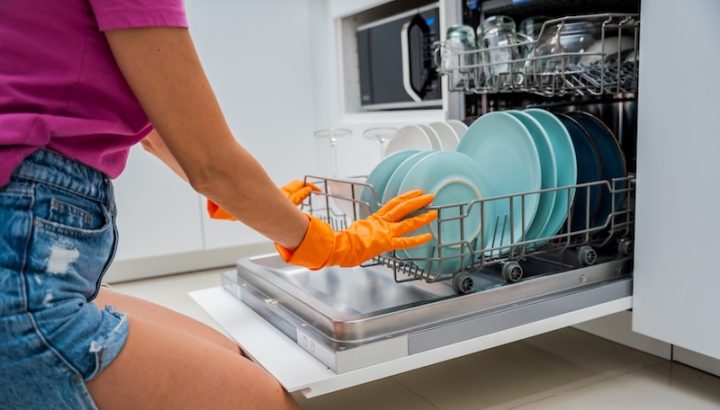

A dishwasher can make your days easier. But did you know that it needs to be cleaned regularly? Food scraps, fat, and limescale build up over time, and this can have unpleasant consequences. Bad smells and clogged sieves can develop when the dishwasher is not properly maintained.
Luckily, cleaning a dishwasher is easier than you might think. With the right methods, your dishwasher can stay clean, work flawlessly, and last longer. In this article, we’ll show you how to clean your dishwasher with home remedies or special cleaners. This will ensure that your dishes not only look clean but also become truly spotless.
Why should you clean your dishwasher regularly?

A dishwasher takes work off your hands every day, but for it to reliably deliver clean dishes, it also needs regular care. Many people think that a dishwasher cleans itself, but this is a myth. Over time, fat, food residue, and limescale build up in various areas of the machine. This can not only affect cleaning performance, but also cause unpleasant odors and even damage.
Grease and limescale deposits impair cleaning performance
The more you use your dishwasher, the more grease and limescale residue build up in the spray arms, filters, and seals. Limescale deposits can clog nozzles, causing water to no longer circulate properly. Grease residue forms a greasy film that is not only unsanitary but also makes dishes and glasses look cloudy or stained after the wash cycle. Regular cleaning removes these deposits and ensures that your dishes are always sparkling clean.
Bacteria and mold growth due to moisture
A dishwasher is damp and warm, which are perfect conditions for bacteria and mold. Germs can settle over time, especially in the door seals and filter. Not only does this cause an unpleasant smell, but it can also spread to your dishes. Who wants to use plates or glasses that are contaminated with invisible bacteria? Regularly cleaning and airing the machine will prevent mold from forming and ensure hygienic cleanliness.
Longer life and better energy efficiency
A dirty device has to work harder. Clogged spray arms or an added filter force the dishwasher to use more energy and water to achieve the same result. This not only leads to higher electricity costs but can also shorten the service life of the device in the long run. So, those who clean their dishwasher regularly not only save money, but also avoid expensive repairs or buying new ones early.
Professional cleaning as an alternative
Not everyone has the time or desire to thoroughly clean their dishwasher regularly. If cleaning is too much work for you or you can’t remove stubborn deposits yourself, there’s a simple solution: Have your dishwasher cleaned by a professional cleaner using Helpling. If the cleaner is cleaning your kitchen anyway, they can also take care of the dishwasher directly. This way, your appliance stays hygienically clean without you having to worry about it yourself. A practical solution for anyone who wants more time for other things.
Clean the dishwasher with home remedies
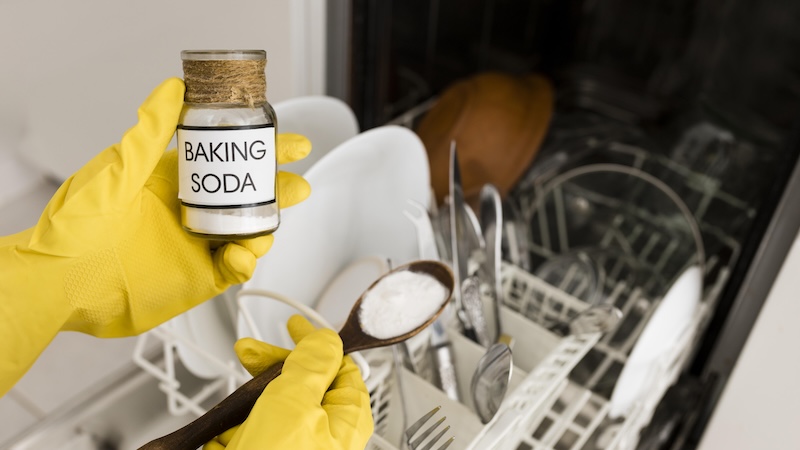
If you value a clean kitchen, you probably already have the most common home remedies, such as vinegar, baking soda, or citric acid, at home. These natural helpers are not only inexpensive and environmentally friendly, but also extremely effective at eliminating grease, limescale, and unpleasant odors in your dishwasher.
- Vinegar – The Lime Solver
Vinegar is a real multi-talent in the household. Thanks to its acidity, it reliably removes limescale deposits and ensures that your dishwasher is sparkling clean again. Simply add a cup of vinegar to the top compartment of the empty machine and run a hot rinse cycle without dishes. This is how limescale residues and unpleasant odors dissolve immediately.
- Baking soda – Fights against fat and bad smells
Baking soda is great for removing grease buildup and ridding the dishwasher of bad odors. Sprinkle one or two tablespoons on the bottom of the machine and start a short rinse cycle. By the way: Baking soda is also ideal for cleaning the microwave or kitchen cabinets, simply mix with a little water to a paste and apply
- Citric acid – Fresh scent and radiant shine
Citric acid not only works against limescale, but also leaves a pleasant, fresh scent. Dissolve two tablespoons in a glass of water and pour the mixture into the dish soap compartment. A hot wash cycle removes deposits and restores the shine to the stainless steel parts of your dishwasher.
Cleaning the dishwasher: step-by-step instructions
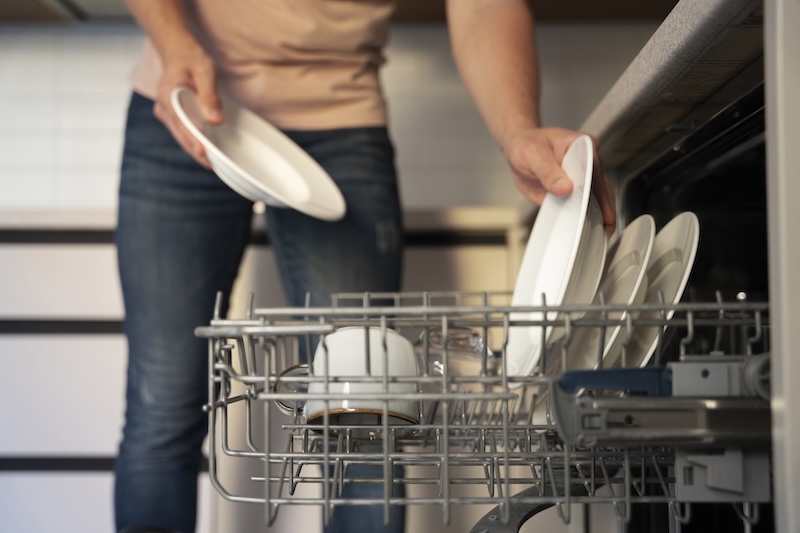
A clean dishwasher not only ensures shiny dishes but also extends the life of the appliance. With these simple instructions, you will clean your dishwasher thoroughly, step by step.
1. Remove coarse food residue
Before cleaning your dishwasher, you should remove any coarse food residue from the machine. These can become trapped in the filter or spray arms and cause clogged drains in the long run. Check the interior, especially the floor area, regularly and dispose of food scraps immediately after the rinse cycle.
2. Clean the sieve and filter
The filter is one of the most important components of the dishwasher. It catches small food scraps before they go down the drain. Remove it and rinse it thoroughly under warm water. If fat or limescale has accumulated, a mixture of warm water and a little vinegar will help. Make sure to dry the filter thoroughly before reinserting it.
3. Clean spray arms and seals
Clogged spray arms can prevent your dishes from getting properly clean. Check the small nozzles for debris and carefully remove them with a brush or toothpick. Also, don’t forget the door’s rubber seals; they often collect dirt and moisture. Simply wipe them with a damp cloth to prevent mold growth.
4. Clean the interior and cutlery basket
The interior walls of your dishwasher will build up grease and limescale over time. Wipe them with a soft cloth and a little vinegar or mild cleaner. The cutlery and dish basket should also be removed regularly and cleaned under running water. How to avoid deposits and ensure hygienically clean cutlery.
5. Hot idle rinse cycle for deep cleaning
For a thorough cleaning, you should perform a hot idle rinse cycle at least once a month. Run the machine without dishes at high temperature to remove grease, limescale, and bacteria. For extra freshness, you can sprinkle a cup of baking soda on the bottom of the machine – this neutralizes unpleasant odors and enhances the cleaning effect.
Additional tips & tricks for cleaning your dishwasher

Regular cleaning is important, but with a few extra tricks, your dishwasher will not only stay clean but also hygienically fresh. That’s why we’ve put together some simple but effective tips for you:
Ventilate the dishwasher regularly
Moisture is the perfect breeding ground for bacteria and mold. Leave the dishwasher door open a gap after each wash cycle to allow the residual moisture to escape. This will prevent unpleasant odors and ensure a fresh indoor climate.
Properly dose dishwasher salt and rinse aid
Limescale deposits can significantly affect the cleaning performance of your machine. Make sure to always add enough dishwasher salt, especially in regions with hard water. Rinse aid ensures streak-free dishes and improves drying results. Check the dosage settings on your machine and adjust them to the water hardness if necessary.
Avoid typical cleaning errors
Sometimes, well-intentioned can also be harmful. For example, do not use pure vinegar for cleaning, as it can attack seals and plastic parts. Too much dish soap or unsuitable cleaning agents can also leave residue. Instead, rely on home remedies such as baking soda or special dishwasher cleaners that gently care for the appliance.
Summary
A clean dishwasher is more than just a luxury; it is a necessity if you want to rely on reliable cleaning performance and proper hygiene. Over time, grease, limescale, and food residue can accumulate, impairing the effectiveness of the machine and leading to unpleasant odors. But with regular care and a few simple cleaning steps, you can ensure that your dishwasher always works perfectly.
If you want to clean your dishwasher, we recommend trying proven home remedies. Vinegar, baking soda, and citric acid are not only environmentally friendly but also extremely effective. And if you don’t have the time or inclination to do the cleaning regularly, you have the option of resorting to professional help.
By giving your dishwasher the attention it needs, you not only extend its lifespan but also save energy and avoid expensive repairs. A few simple steps are often enough to keep your appliance hygienically clean and ensure that your dishes always turn out spotless. Give your dishwasher the care it deserves and enjoy clean dishes without compromise.